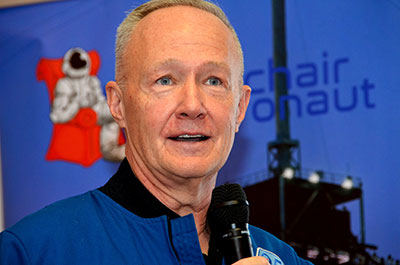
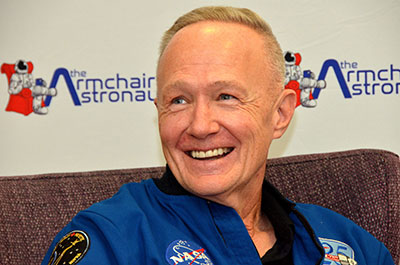
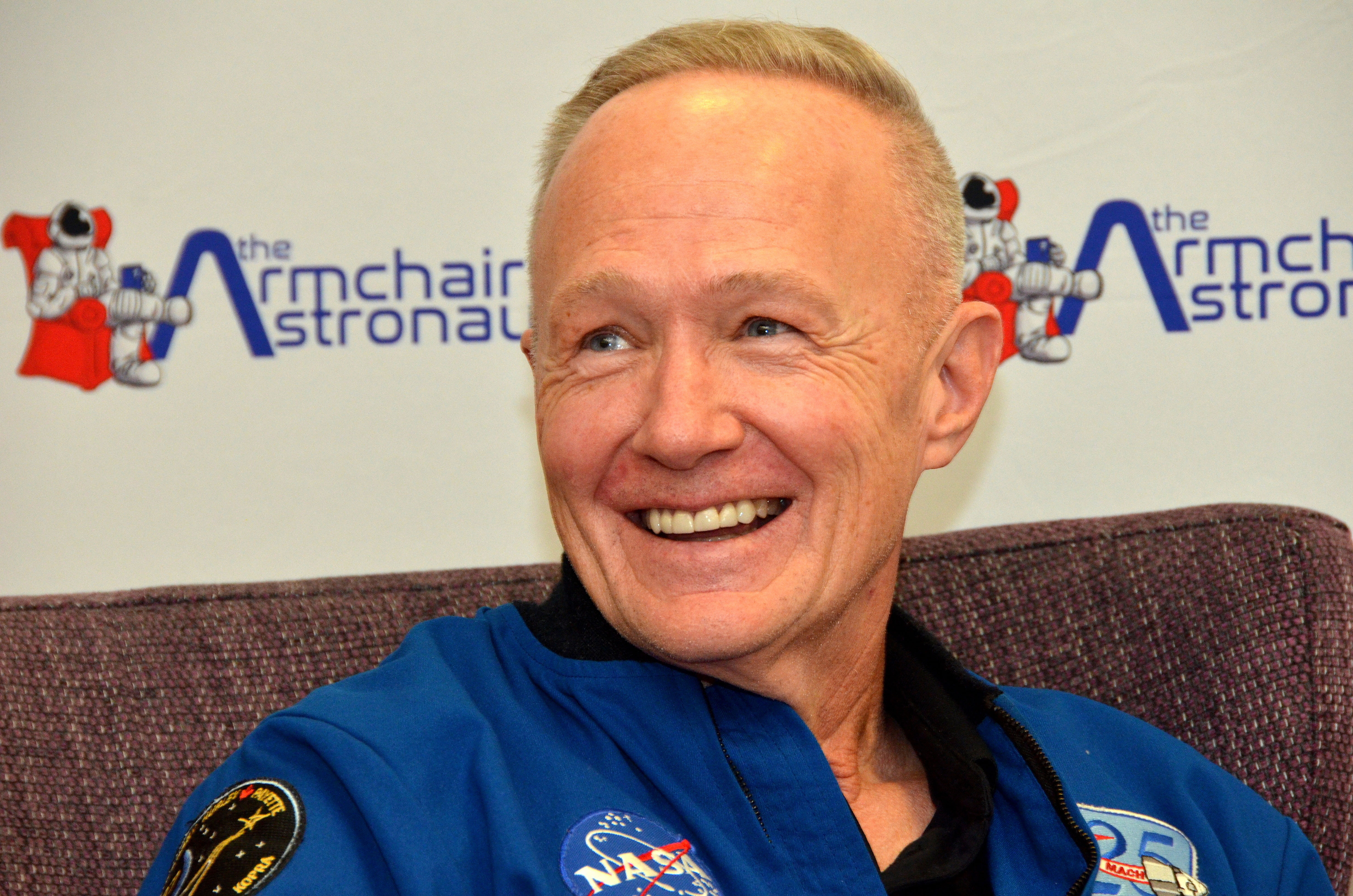
Before the lecture, I was afforded an opportunity to sit with Doug for a quiet chat.
Q: I believe that NASA astronaut classes from the late 80s onward have been comprised largely of two types of people. Those who as children were inspired consciously or subconsciously by the Mercury, Gemini and Apollo pioneers to become astronauts and those like Dan Tani for instance, who never gave it a thought and stumbled in to astronautics later in life: the result of fate and/or circumstance coupled with a "well, why not - let's give it a go" attitude. Which camp did you fall in to?"Actually, I was more the second one. I had a pretty big interest in science and science fiction growing up, but my bigger desire or fascination was to fly aeroplanes. My bedroom had aeroplane models hanging from the ceiling, and before I went to college a Navy recruiter came to an information night and said something along the lines of "we would pay for you to go to college and maybe you could fly jets in the Navy.
"I guess, if there was an 'Aha moment' it was that. Of course, I had a discussion with my parents about college. and paying for college, but they couldn't afford it so that would be a good way to go."
Q: As an experienced flyer and test pilot, I'm sure you found much of your astronaut training pretty straight forward. Centrifuges, Vomit Comet, parachuting and such were nothing new. But any major change of job inevitably brings new challenges. What did you find challenging during your time as an astronaut and how did you overcome it?
"Great question. As you mentioned, the training was very similar to the military flight training though certainly more diverse, what with classes on orbital mechanics, photography, geography and those types of things. But training for both shuttle and ISS, we were the first group to have a sylibus with both of those subjects and it meant our training was particularly busy for the first two years.
"The biggest challenge for me personally was that I was an incredibly tremendous introvert, and you cannot be a practicing introvert as an astronaut. Part of the job is the public outreach; you're the face of NASA – the face of the space program. I knew public speaking was coming, and at times they would bring in public speaking folks to prepare me for that. One in particular resonated with me and has remained a great friend of the family, but that was my big challenge.
"And I was just one of a bunch of people who I was competing with to fly into space and that brings with it a tremendous amount of politics that goes into the selection of crews. To this day, public speaking remains one of those things I am not comfortable with, but I am significantly more comfortable with it than I used to be, almost as comfortable as flying an aeroplane."
Q: I presume you met Karen for the first the first time as members of NASA's 18th astronaut intake, when you both became unofficially "Bugs": You were married in 2009. Nine years between meeting and marriage is a long time. How long did it take you and Karen to appear on each other's radar, and were relationships with fellow astronauts discouraged or frowned upon by NASA management?"Yeah, that's a good question. We were the 'Millenium Bugs' that's right and when you meet your classmates it's an exciting time. They all have the same hopes and ambitions to fly in space that you have.
I remember meeting her and I thought wow; she was so impressive. But I was a fighter pilot and she was a Phd, and that is a clash of two different worlds in a lot of ways. But even to this day, I was so impressed by Karen: she came from a home town of just 70 people and she was one of those as we discussed earlier, knew from the age of 5 that she wanted to be an astronaut – Sally Ride and the first group off female astronauts selected in 1978 inspired her. As an undergrad she worked for NASA and in fact her first job was as an engineer at NASA.
"It just took a bit of time: I don't think relationships within the astronaut corp are particularly frowned upon and in some ways we were not unique – our closest friends Bob Benken and Megan McArthur were from the same class as us and they were married a year before us in 2008. But in someways it is a huge advantage to be in a relationship because of those parts of the job that maybe you don't have to explain because she experiences those too. That was hugely advantageous when we were going through all the challenges with SpaceX: we blew up rockets, we blew up capsules and so on. Having a wife who was not aware of the things going on behind the scenes would have been more challenging. Only one time did Karen ask me "are you sure you want to do this." But I tell people this all the time, the best part of my astronaut experience was meeting Karen and having our family."
Q: My wife and I have been married for 42 years and we are very competitive with one another. Are you and Karen competitive with each other and has that ever manifested itself during your time as active astronauts?
"No, I think maybe the opposite in that we try to just support each other and nurture each other as best we can. Part of that is because we flew in different roles. I was a pilot and Karen a mission specialist... initially: her first flight occurred in 2008 when we were dating - a year before my first flight.
"During that time, when you look at the seats that were available, there was the pilot's and commanders seats, but there were five mission specialists seats on each shuttle mission. It doesn't take a lot of math to figure out that there were more opportunities for mission specialists. The other problem was the way crews were assigned, and there was a time they were maybe flying only one rookie per flight: the explanation from leadership was "these space station assembly missions are so complicated, we couldn't afford to fly too many rookies." That really set us pilots back, not only in our class but the two classes preceding us, because they had so many people.
"There was a big line, and so they actually came to the pilots in our class and asked if we wanted to fly as mission specialists because of the limited number of pilot seats. And by that point, we knew the end of the shuttle program was on the horizon. I was not tempted for one second. But the question was asked not by management, but one of the senior astronauts whose name I won't mention. And my first question to him was 'well, am I going to be one of the first pilots to fly or one of the last?' He couldn't answer and I thought overall it was horribly managed, but I personally did not think I was going to be one of the last to fly."
Q: I would imagine, NASA has protocols preventing married couples from flying together in space, particularly if they have children (Jack). But let's just suppose that a private company approached you both to fly in space as a couple. Would you consider it and if you did, could you for see any potential issues or drawbacks?
"Oh, I think we'd love to do that but the deal has always been, if we fly again all three of us would fly: we'd take our son Jack with us. As far as the protocol, I don't know of any rule but we had decided that once we had Jack, we wouldn't even fly together in a T-38 for that very reason. At the end of the day, I not have been tempted to fly in space again and I made the decision — well, we made the decision — even before I flew on DM-2, that that was going to be my last flight.
"You don't realize it until you go through it, but when Karen flew on her first flight and came back, of course she was so excited as it was the culmination of a lifetime's work and dreams. Then we got talking and I said 'that was pretty hard' to which she said 'what do you mean?' It was just the sitting there looking on. And then, when I came back on STS-127 (by that time Karen was pregnant with Jack, though not many people knew that at the time), Karen said to me 'I know exactly what you were talking about.'"
Q: Given your experience, I would presume you would be mission commander. How would Karen like taking orders from her husband?
Doug laughed then answered... "You'd have to ask her that! She's the real boss, but I think she would completely defer to me in that type of environment. We are a really good team, and understand what each other brings to the table so I don't think it would be that hard, though she would definitely call me on something if she thought it was a questionable decision."
Q: In 2017, I interviewed "Scooter" Altman. I asked him, of all the aircraft he had flown, which was his favourite. He replied "The F-14 Tomcat, because it was like flying a Cadillac." You have flown many types of aircraft so which was your favourite and why?
"The F-18, because that's what I flew. Scooter was a Tomcat pilot and I was a Hornet pilot. I remember taking Karen to Pensacola several years ago on vacation where Naval aviators start flight school training. So of course, I had to take her to the Navial Aviation Museum because it's the mecca for Marine Corp pilots, and there was an F-18 on a static display: Karen took one look and said "Oh I get it now - your first love!"... and she's probably right.
"It was actually a sad day for me when I exceeded my total flight time on the F-18 with time aboard the T-38. Not that the T-38s weren't fine aeroplanes but it was still a bit of a sad day when I exceeded my Hornet flight time."
Q: You are an aviator and test pilot: the shuttle shares some features of an aircraft – wings, rudder, aileron, etc etc. To me as a civilian, flying the Dragon spacecraft is akin to a very dynamic X-Box flight simulator. But you were the first to fly Dragon and being the first to fly ANY new spacecraft brings a certain kudos particularly among your peers. Is that kudos sufficient to make flying Dragon the greatest achievement of your astronaut career... and if not, what was?
"That's another great question. I don't know if I can honestly answer that. It's kind of like picking your favourite child. If you look at it from the perspective of a test pilot- and Bob and I talked about this, it was frankly a once in a generation thing to be a test crew on a new spacecraft... and that has only been done a few times in the history of US manned spaceflight.
"It's really neat that within a few years, relatively speaking, we had the first flight of Dragon and the first flight of Starliner - albeit not successfully. And then we had the first crewed flight of Orion. Ideally, we will have Blue Origin and Starship landers opportunities soon, so it has been a kind of a unique time in space history.
"If I look at it from a historical perspective, you would argue that testing Dragon has been an incredible achievement in my career but from purely a pilot's standpoint, shuttle was the best. The other thing I would say about Dragon, I will maybe be the only person to have flown the spacecraft manually, because the mission profile is such that it is designed to do everything automatically. But we actually flew it manually both in the far field and near to space station: I did everything manually using the touch screen to validate that those were viable options... but you're right: it was like flying an iPhone."
Q: In total, you spent in excess of 92 days and 10 hours in space. What would you consider your most memorable single moment over the course of your three missions – STS-127, STS-135 and SpaceX-Demo 2: one stop and pause moment that more than any other has stuck in your memory?
"Wow! I don't know if I can give you a good answer there. Each flight has its own incredible memories, experiences and milestones that are hard to top.
"With STS-127 being my first flight and flying with Mark Polansky and Chris Cassidy - who are close friends to this day, that experience coupled with literally finding out that just a few days before we flew, that Karen was pregnant with Jack.
"And then of course with STS-135 being the historic end of the program, flown with just four crew for the first time in many, many years. And then DM-2 was an experience of a lifetime in so many ways, particularly while flying with Bob Benken, my closest friend, on the first manned test flight since STS-1. That in and of itself was an experience, working with SpaceX, that was unique.
"So it's really hard for me to pick out one particular thing, but coming home after each of those missions was probably the one thing I would say if I had to choose one, because for the most part everything in each mission worked out as it should and I was coming home to my family."
Q: I've spoken many astronauts over the years and I've asked each if they had any regrets from their time in space. Legend has it, Pete Conrad for instance took a remote shutter release to the moon on Apollo 12 - to capture him and Al Bean together in the same photo... but misplaced the remote in a lunar samples bag. Do you with hindsight have any regrets from your time is space?
"I don't think there was anything I planned to do, but if there is a regret it would be trying to live more in the moment and that is as much about the flights themselves than my personality. Especially the shuttle flights, I don't think people realise just how busy we were for those two weeks. DM-2 was roughly ten weeks and even then, we only had two weekends when we didn't work: it was insane! But I think I did a better job on DM-2: on my shuttle flights it was really hard for me to take in a moment.
"Even after the flights it's a case of "Okay then, what's next?" The unfortunate thing after DM-2, was that we were still in Covid and I personally was disappointed that we couldn't really take it in with the teams... for a million reasons. But when Bob and I were awarded the Congressional Space Medal of Honor, it ended up being this incredible experience more so because there were people that were very valuable to that mission that were there, and we had an opportunity finally to celebrate with them and that was really a special moment."
Q: Some of your former colleagues have expressed sadness and disappointment at the impact the Russian invasion of Ukraine has had on the whole tenure of joint US and space cooperation, expecting it to cease when ISS is deorbited. Do you share those views or are you more optimistic for the future? And I'd understand if you feel uncomfortable answering that question.
"No, that's fine. I'd like to answer that question. I spent a year and a half as Director of Operations in Russia: a lot of time there relative to my peers, and we had such a good relationship at that worker level with the Russians. I was there in 2006/7 and Star City was still military, and had not been converted to the kind of civil type model like NASA is in the United States.
"However, I never saw that in space on all three times I was up there. The Russians were spectacular - all pulling in the same direction, working for a common goal trying to do our best for each other. In fact one of the Russians we hadn't even met until we got into space.
"But it is such a shame now because the International Space Station has been such an incredible and positive experience. We still have a crew or two training over there now, but it's got to be different from what it was when I was over there. We would have 8, 10, 12 crew members there at a time because it was the kind of heyday when we were flying two Soyuz flights a year: and then you would have the back-up crews too! So, it is really disappointing to see where we are right now."
Q: What are your most prized souvenirs or artefacts from your time as an astronaut?"We were able to fly things, but typically I would fly stuff for other people. Everything that I flew in space is pretty neat but we just moved in to a new house just before Christmas and Karen and I have boxes of "stuff" flown in space. But I flew a pair of Naval Astronaut wings on all three flights, so they are pretty special.
"The ironic thing on DM-2 is that we splashed down close to Pensacola, so it was this real full circle moment for my aviation career to do that. But that was not intentional. I can promise you, that when we launched on DM-2, we didn't know where we were going to come back because SpaceX hadn't figured it out yet. They had an idea that it might be this site or that site, but they had NO clue. To land off Pensacola and then fly out from there to Houston was pretty special.
"And of course, Karen and I flew our wedding rings which is great having those things as part of our journey."
Q: Have you any plans to write a book, perhaps a joint autobiography with Karen, given your overlapping career paths and shared experiences. And if that idea has not been considered, and is subsequently adopted, can I share in the royalties?
"I will just say this: I have been approached to do a book - both with Karen and individually, but my first instinct is "who wants to read a book about me?" And then the next instinct is that if you are going to do it right, it's got to be a lot of work and now is not that time. I still work full time for Northop Grumman and it has been 5 years of great fun, though I'm not sure for how much longer.
"Maybe a book might be a possibility as I work toward semi-retirement: that would be the fairest thing to say. What worries me is remembering everything and getting the right stuff in it!"
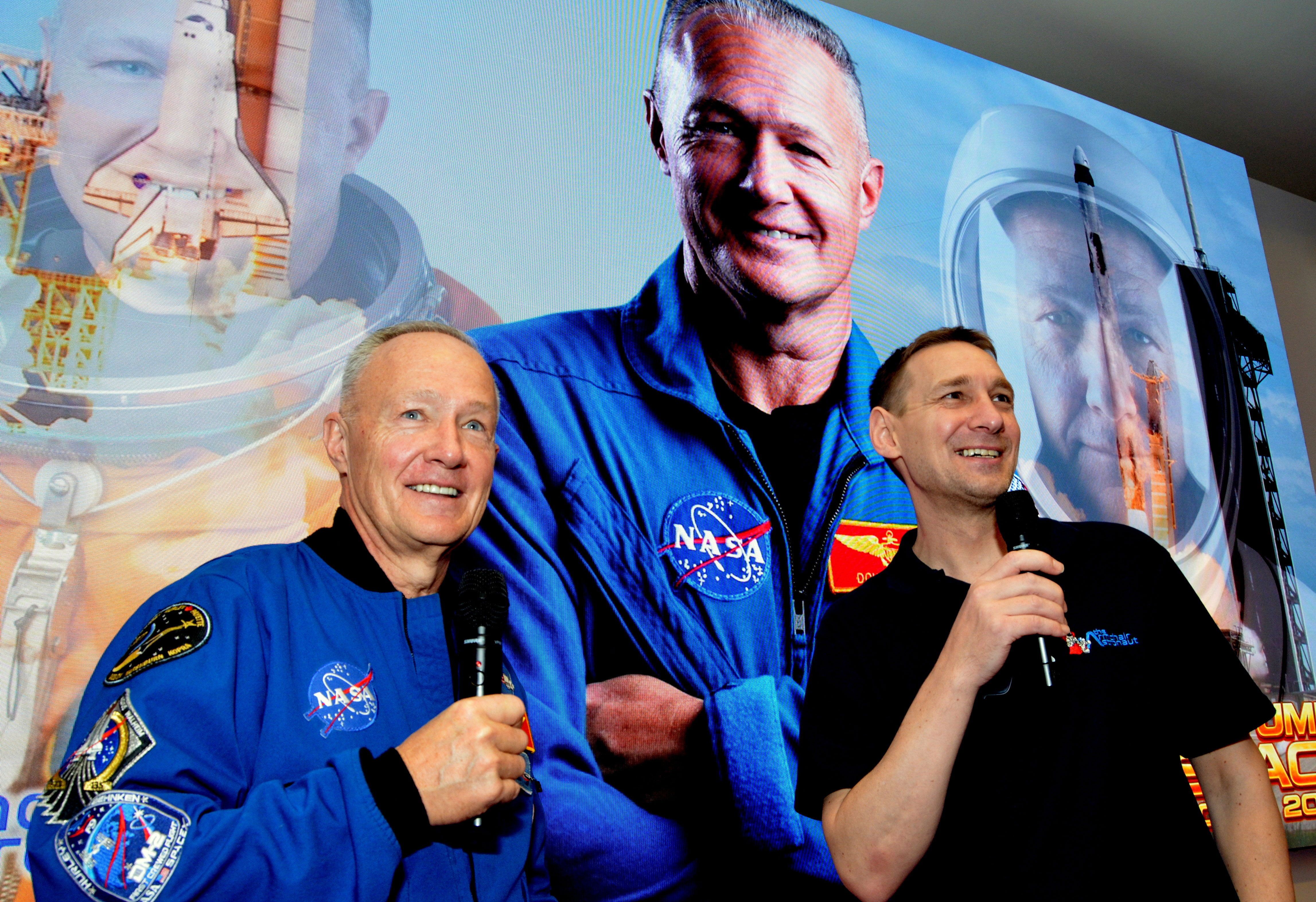
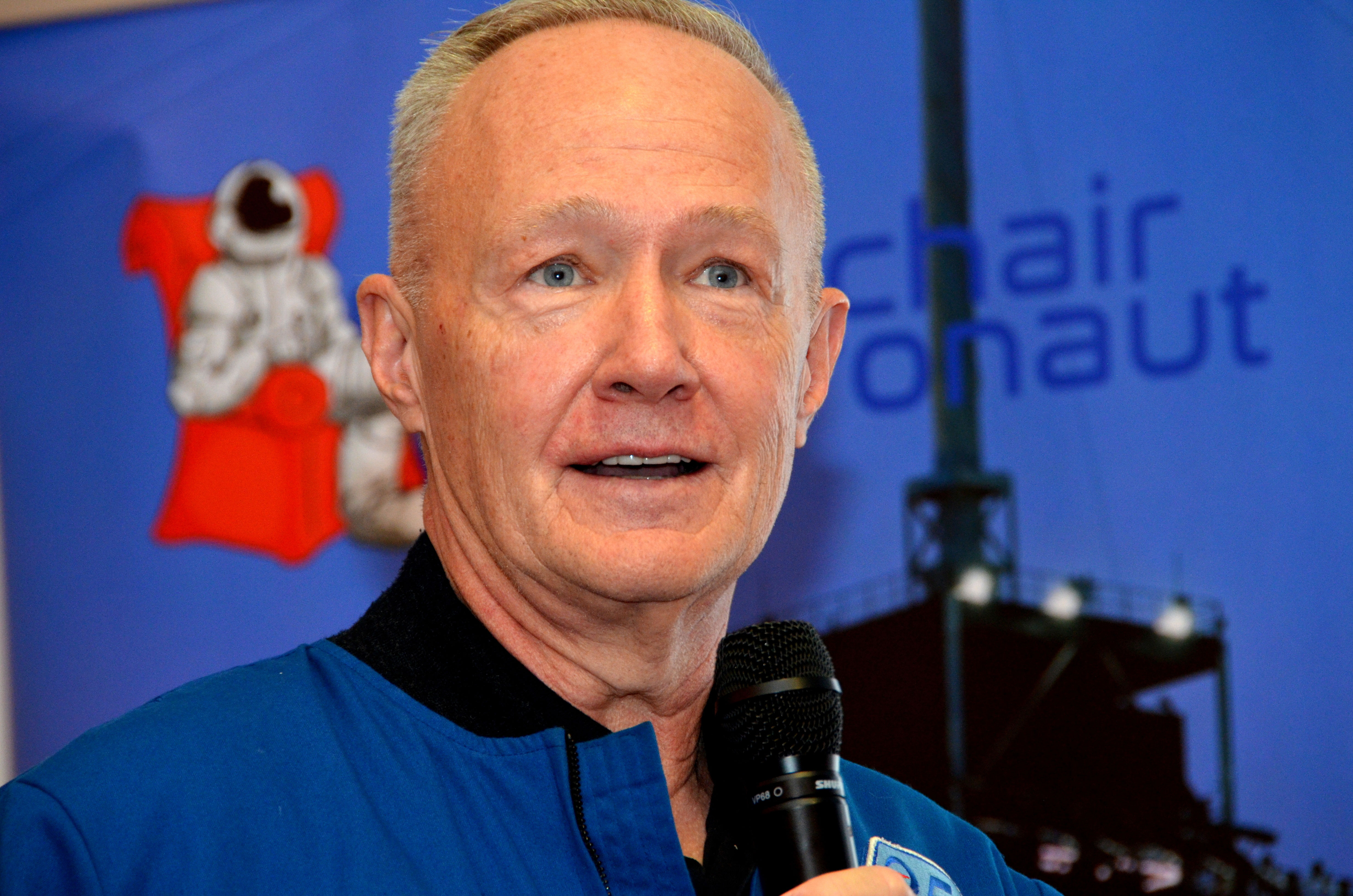
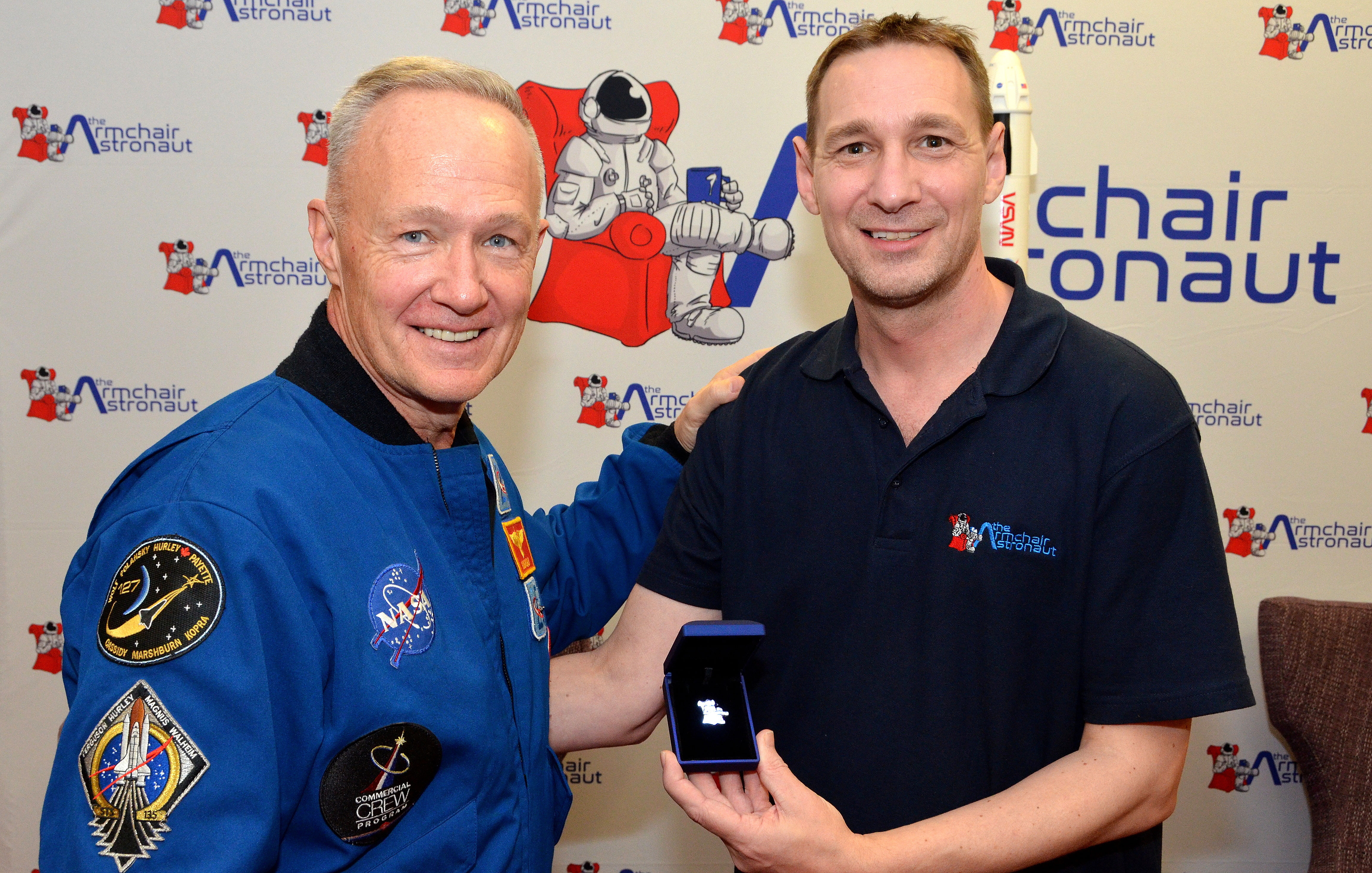
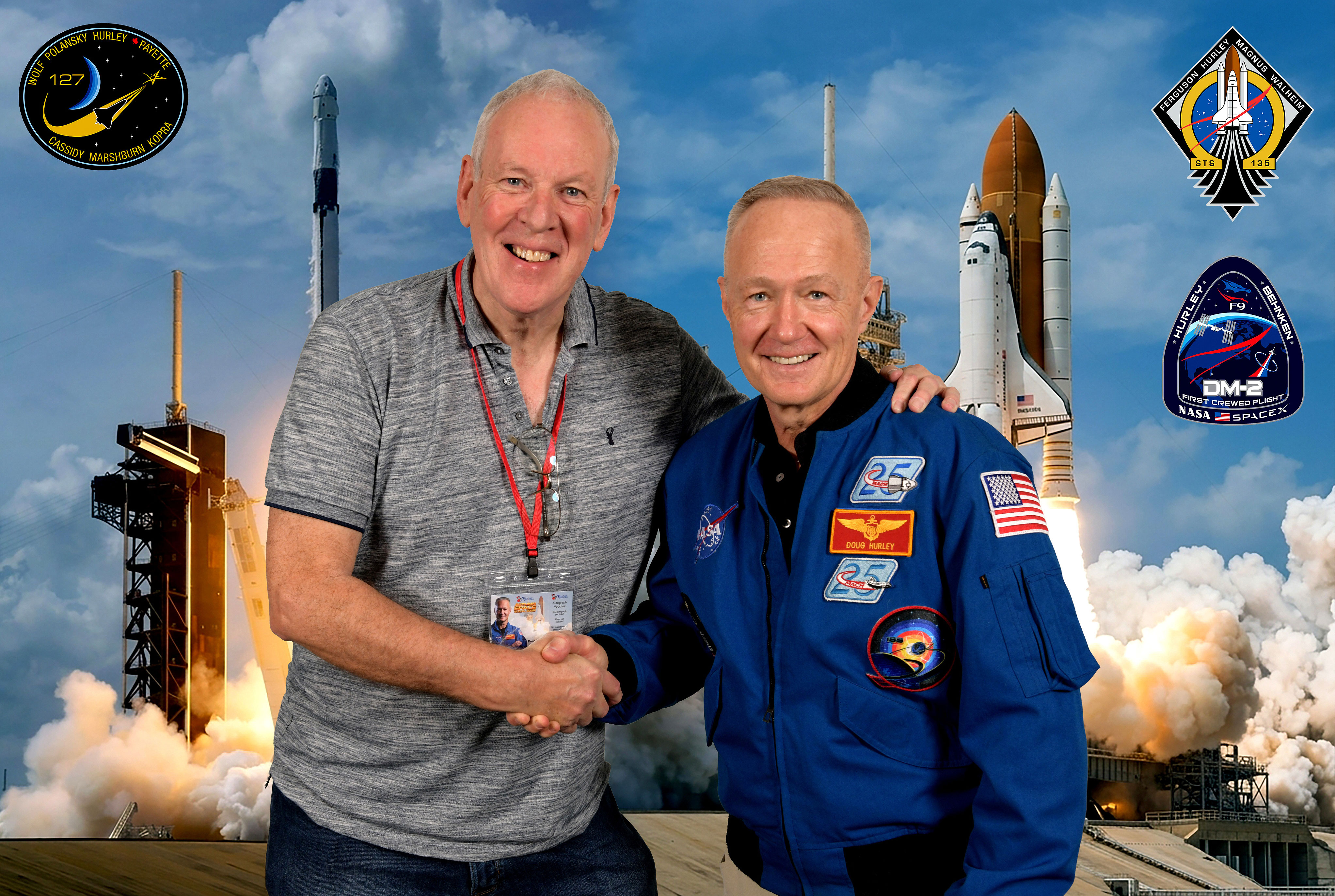
Throughout the day, Doug had been a delight and it was evident that he enjoyed himself too. Eloquent and engaging in equal measure, Doug had time for everybody: no question was too long or convoluted: each encounter earning a considered and comprehensive response that will surely live long in the memories of those in attendance.
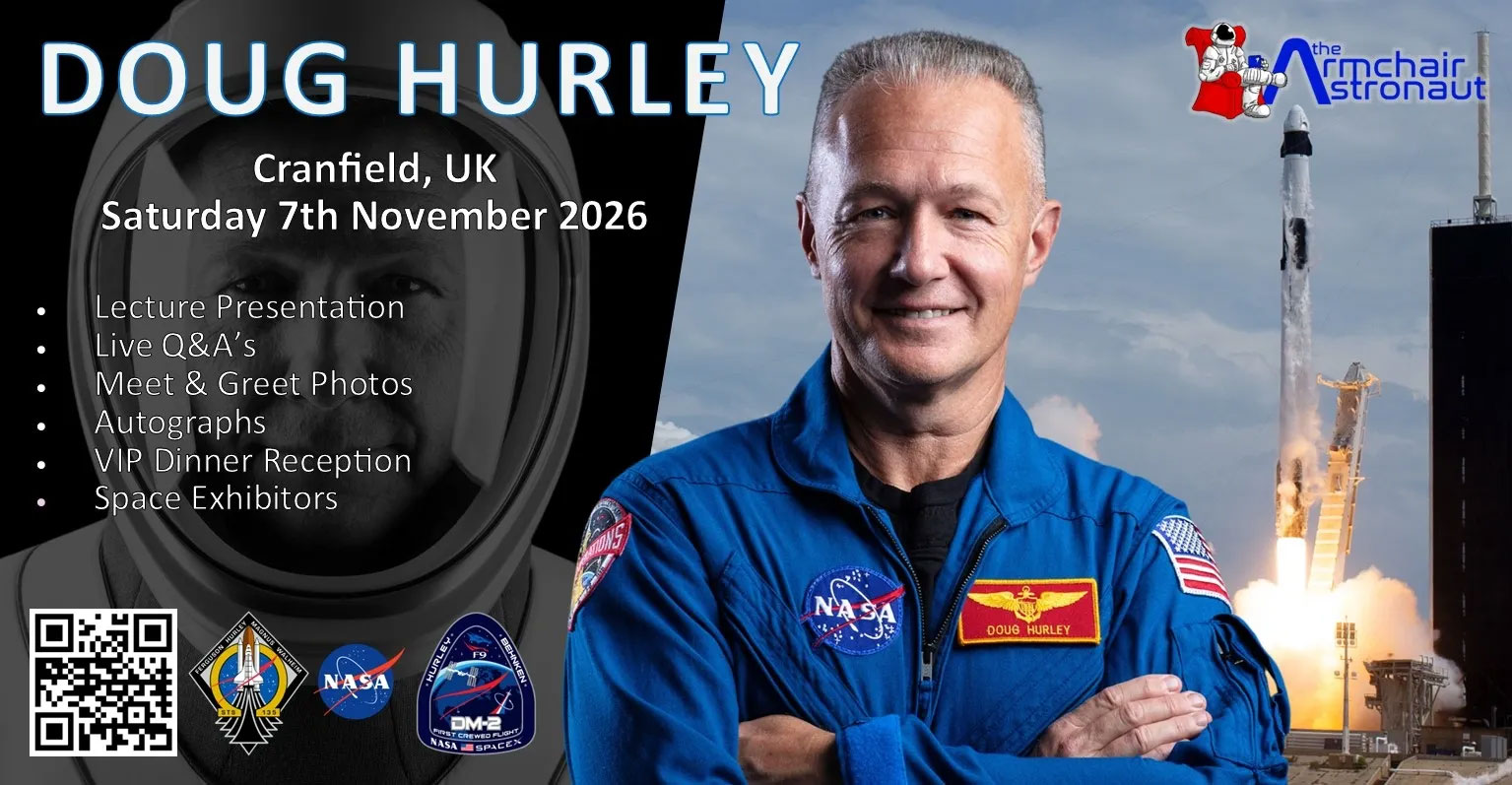
2027 beckons, with further Space Socials on the horizon. Who, when and where? Rowland is keeping those details close to his chest for now. Keep an eye on TheArmchairAstronaut.co.uk and follow The Armchair Astronaut on social media for announcements.







 posted 07-27-2026 10:19 AM





 advertisement