 posted 07-15-2026 05:32 AM
  
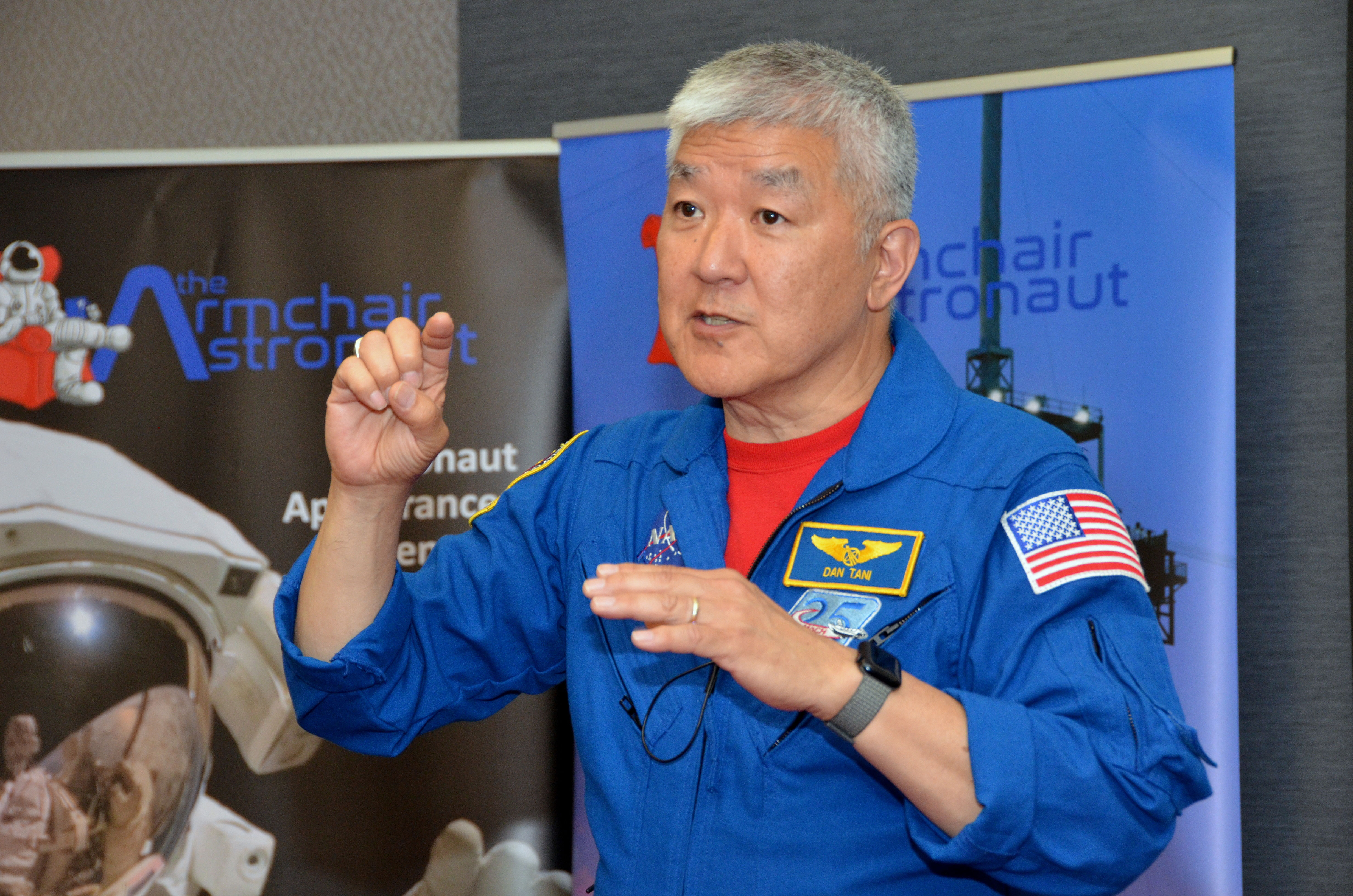
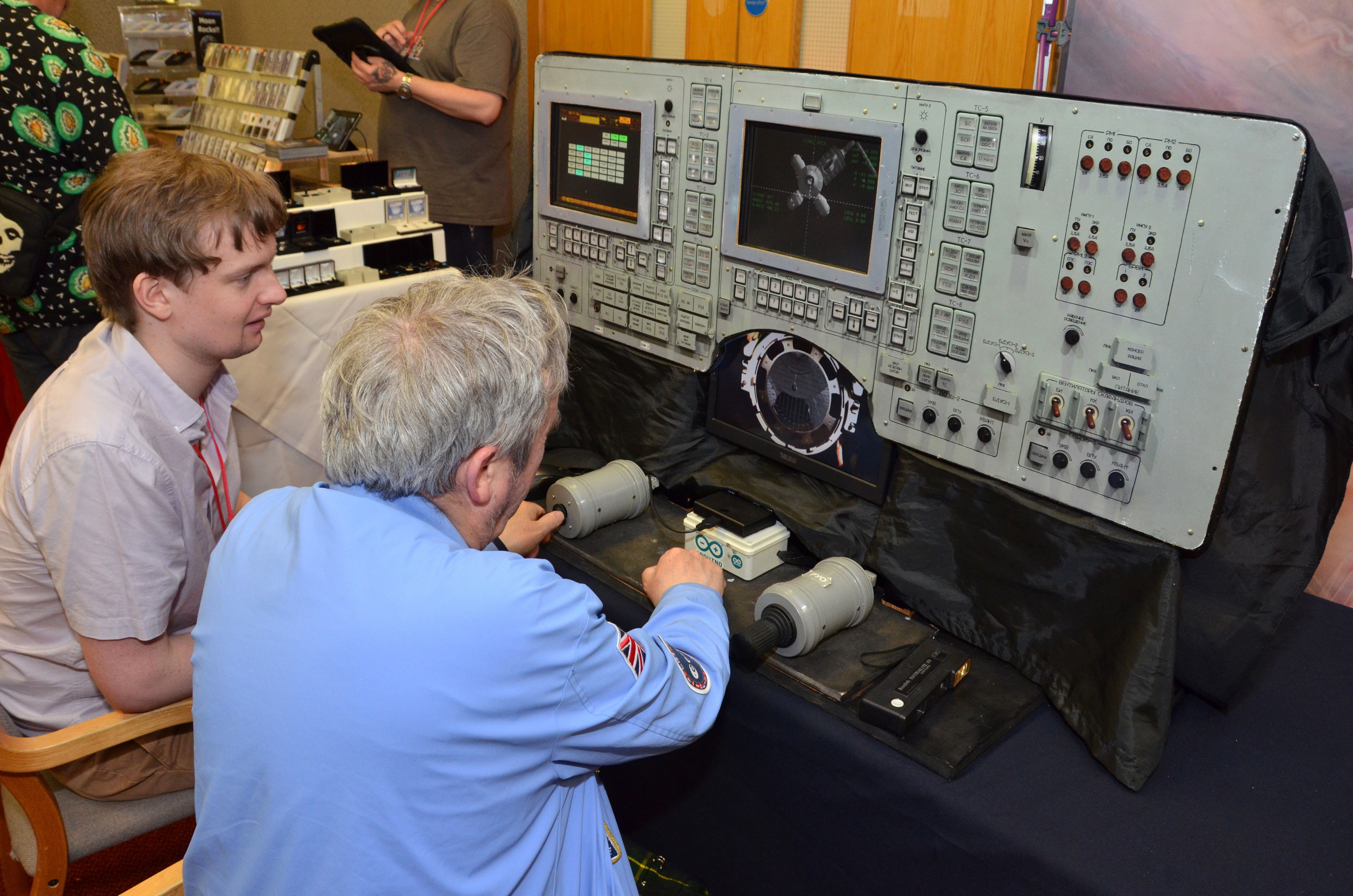
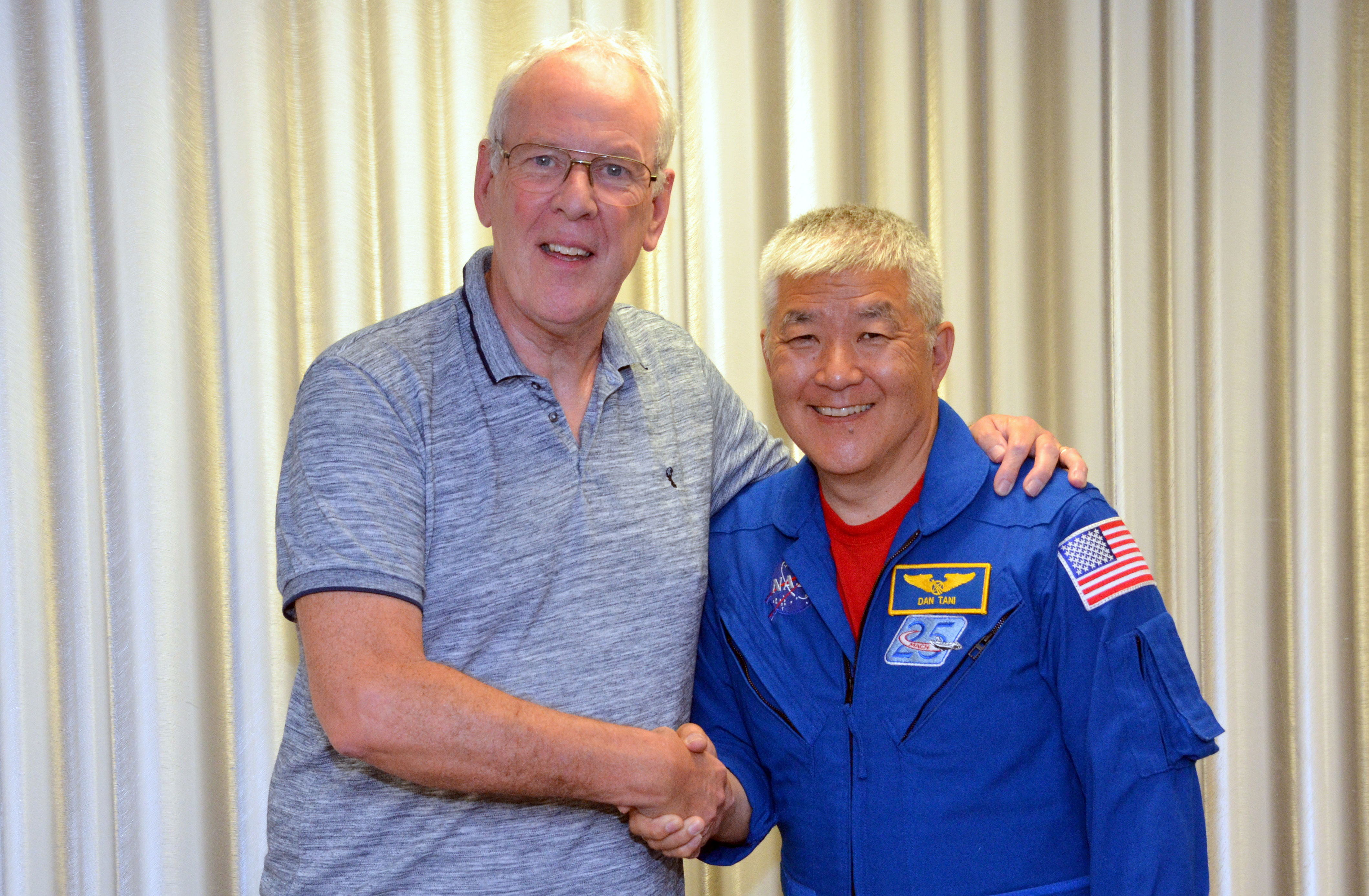
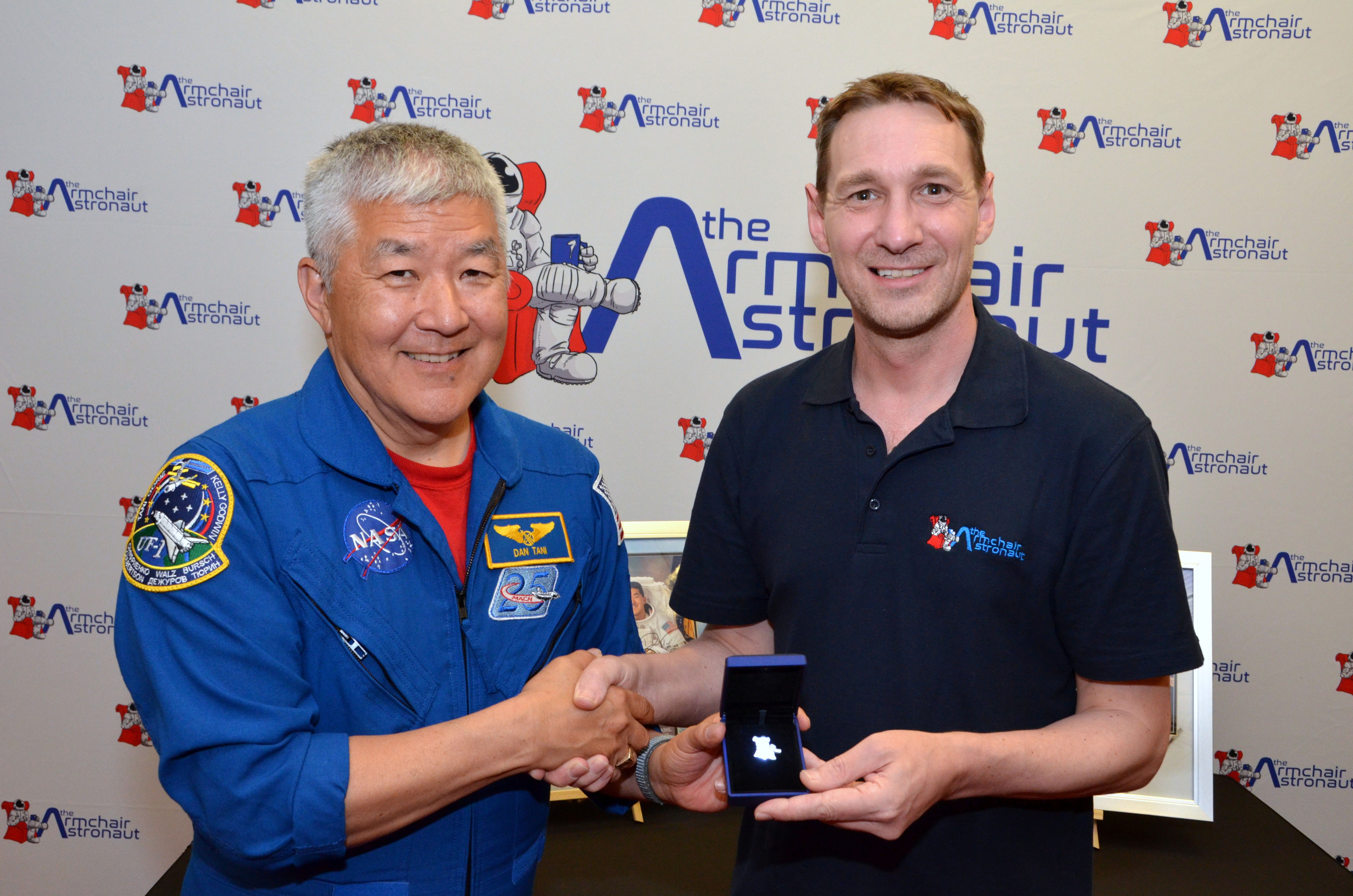
Dan Tani was the guest speaker at The Armchair Astronaut's latest Space Social, on a very hot and sweaty July 11th in Cranfield (UK). Thank goodness for air conditioning!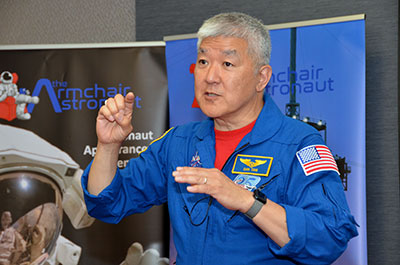 Exhibitors and trade tables catered for hardcore space nerds and the casual enthusiast alike. From patches, photographs and meteorites to signed books, flown artefacts, space art and a plethora of space collectibles. The British Interplanetary Society even turned up with a Soyuz docking simulator! 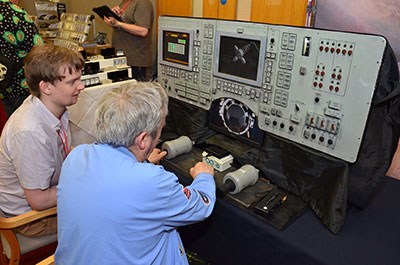 The afternoon lecture covered his childhood, education and early career. Yes, young Dan followed the moon landing as a kid, as did everybody else. And yes, young Dan built model rockets and launched them with increasing levels of success, as did many of his contemporaries. But this did not instil in him a burning desire to be an astronaut. It did instil however a passion for mechanical things and he knew he wanted to be an engineer, while not necessarily understanding exactly what that entailed. Bachelor and Masters degrees in mechanical engineering at MIT led to work at Hughes Aircraft Corporation and then Orbital Sciences Corporation in Dulles Virginia. Roles as Senior Structural Engineer then Mission Operation Manager for the Transfer Orbital Stage deployed by the shuttle brought him in to contact with astronauts who it transpired were ordinary blokes like him. Work on the Pegasus program followed before coming across an advert for a new intake of astronauts from NASA. What did Dan have to lose by applying: he had an impressive CV sprinkled with lots of the right kind of credentials. Dan got back exactly what he expected to get back. A rejection card from NASA but hey, he was impressed to even get a reply, fixing with magnets and a dollop of pride to his fridge. A second application drew the same response, but on the third attempt... bingo! In April 1996, Dan got the call to become an astronaut. He was one of Class 16: a group of astronauts that became known as "The Sardines" on account of an intake of 44 newbies crammed in to offices and around desks designed in the late 50s and early 60s when nine astronauts were considered a lot! But being a Sardine was a moniker that Dan is proud to wear. Two shuttle flights (STS-108 and STS-120/22) and a long duration ISS mission (Expedition 16) totalled 131 days and six EVAs before Dan retired from NASA in August 2012. And as he recounted his missions in detail, it was evident engineering floated his boat as much as flying in space. The way he described the physically exhausting mechanics of the human interaction with his suit while conducting an EVA I found particularly insightful. Perhaps I am a closet engineer! Dan brought with him an easy style and a great sense of humour. I watched him throughout the day both public facing and in private and he had time for everybody. So much so, that the post lecture signing took three times longer than planned, and the 25 minutes earmarked for my interview with him shrank to 13! So, I thought I would keep it as brief as possible and keep it light. 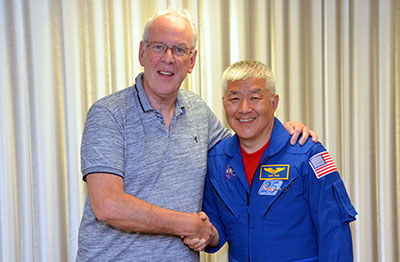 Dan. Your wife Jane is from Cork in Ireland. How did you meet?I was golfing at a brand new course in Ireland (near Cork) that everybody wanted to play. But the weather was so awful, that they closed the course. So I sat in the clubhouse and talked to the staff. Jane was the manager at the course in 1988, and we got married 16 months later. Have you ever kissed the Blarney Stone (at Blarney Castle) and do you think doing so should be an essential part of training for an astronaut in preparation for public speaking? Of course I've kissed the Blarney Stone, at least once, possibly twice, so I've got the gift of the gab! Chris Sembroski of the Inspiration4 crew when he was here earlier in the year touched upon parts of the training that he found tough: for instance, barfing in the centrifuge. I'm sure many of the astronauts find some parts more enjoyable than others. How did you take to life as an Astronaut and was there anything that you found particularly challenging? The hardest part of training for me was learning Russian. Going to the Space Station requires a proficiency in Russian and I just couldn't get comfortable learning Russian: it was very, very hard. I got to the level I needed to get to but I found that to be the hardest part of training. Most everything else is understanding how a machine works or the suit works and as an engineer that comes second nature. Everything else was fun you know? You get to be in a big swimming pool, practice space walks and fly jets: I was in the centrifuge... but I did not throw up! In the BBC program "Once Upon a Time," you recalled listening to the commentary for Columbia's re-entry on STS-107. You realized something was wrong when CAPCOM called up comms check, especially on UHF. You then got dressed and headed in to NASA because you knew you would be needed? Needed for what exactly? What did you do when you got there and what was your role in the weeks that followed: or did you return to training soon after? All the astronauts went in because they all wanted to help wherever they could. So, my job quickly became taking care of Willie McCool's family. Each astronaut that flies has a Casualty Officer assigned and I was the back-up Casualty officer for Willie. Some people went out in to the field to find parts of the shuttle and recover stuff, but I got in touch with his children, and wife and did what I could to take care of all their logistics, bring them to Houston and deal with the necessary paperwork. In the same TV program, Terry Virts was rather sanguine about his time aboard ISS and he clearly feels saddened and disappointed at the impact the Russian invasion of Ukraine has had on the whole tenure of the cooperation between the US and Russia. When ISS is deorbited, he expects cooperation to cease. Do you share Terry's view or are you more optimistic for the future? I'm more optimistic than Terry. The ISS has been a fantastic diplomatic focal point between the US and Russia and as things have happened between the government, the space program has largely been unaffected. With the end of ISS, we're going to lose that diplomatic channel so it will become challenging, though I'm not as pessimistic as Terry. With Peggy Whitson, you conducted the 100th spacewalk aboard the ISS. Was this landmark celebrated in any way? No. They told us about it during the spacewalk and we thought wow that's pretty cool. Peggy and I were in the same class. When we started at NASA, we got a briefing about the ISS and were told it is going to take over 100 EVAs to build the station, which at the time seemed ridiculous. When we started, they were doing two, maybe three EVAs per year in a good year. The thought of 100 EVAs to finish the space station seemed ridiculous: an almost insurmountable number. And then later in her career Peggy did the 200th EVA on station so she spanned a much larger era. I spoke with Mark and Scott Kelly in 2016. They had discussed and come to terms with the possibility of loss while on orbit, considering it an occupational hazard. And as you know, Scott was in space when his sister-in-law Gabby Giffords was shot. Had you given the prosect much thought before you flew and had you discussed this with Jane or anybody else beforehand? No. I considered what would happen if I was to pass away and did all the preparations if my mission did not go well but there was nothing specifically to prepare for a family member to pass away. My mother was in great health but she was going to be aged 91, so it wasn't a shock if you know what I mean: well, it was the way it happened of course but I was I guess already emotionally prepared for it. It would have been much, much harder if it had been my wife or one of the kids. In total, you spent in excess of 131 days in space including 6 EVAs. What would you consider your most memorable moment over the course of those missions STS-108, STS-120/122/Expedition 16? We did a series of spacewalks to install the Node 2 Harmony module: they were two really intense spacewalks and we finally go to see if we had extended the cooling loop and we wouldn't know until the very end. So when I got to throw open the last valve, and I could feel the ammonia flowing and knew that we had done our job well, that was a real memory of great relief. If we somehow, did it wrong and the cooling loop was not right, the Space Station would have been crippled, so I remember that achievement specifically. What are our most prized souvenirs or artefacts from your time in space, apart from 22 watches (neat gifts to close family and friends? There was some jewellery for my wife and daughters and when my Mom died, we flew jewellery to commemorate her. I'll see my daughters or my wife wear their necklaces on special occasions and the many watches which are a nice reminder of my time in space. I've spoken many astronauts over 40 years or more. I usually ask each if they have any regrets from their missions: Gene Cernan regretted not taking a picture of his daughter's initials drawn in the lunar surface. Setting aside your Mum's passing, do you with hindsight have any regrets from your time is space? There's very little that I regret. There are some specific pictures I wish I had taken. I wish I had fallen asleep in the middle of the lab just to see where I would have ended up in the station: that would have been fun. And while I was there, the cameras onboard were not as good as they are now and some of the pictures I tried to take would have been much better. Not a regret, but my son wasn't born when I was in space so I don't have anything tangible of him that flew with me, like my daughters. But I had a buddy fly as picture of us on a later mission. I understand that golf is one of your favourite past times. After spending a lot of time in space with its associated physiological consequences, how soon after each mission did you return to the golf course and where there any consequences for your swing? The biggest consequence was training took a long time and didn't allow me to golf very often. But I don't remember any issues after my flight. We landed in February after my long duration mission and I then went through a standard protocol of 45 days of physical training. My trainer was also a golfer so on the last day of training he took me out and we played some golf which was fun. You have been a contributor to a number of space documentaries including "Once Upon a Time in Space", and have written the foreword for the book - "Love and Letters in World War II", connecting your own family's history with the lives of the book's subjects. Have you any plans to write books of your own, perhaps an autobiography? Yeah - No. I would like to write a book about my career but I haven't really started thinking about it. It's one of those things I intend to do, but it's one of those undertakings that's bigger than I can tackle right now. Following the VIP dinner Rowland presented Armchair Astronaut pins to nine deserving recipients including Dan, naturally. How would I describe these exclusive pins? Think "Snoopy Pin". They cannot be bought but have to be earned. Limited in number, each contains shuttle flown metals in a form that perhaps incongruously combines living room furniture, and a suited astronaut. But it is a combination that works well, and I consider myself very proud to be amongst the modest ranks of recipients.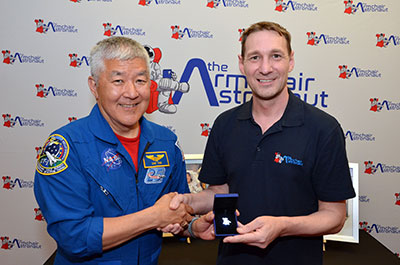 As a departure from previous Astronaut Socials, Rowland sat down with Dan to discuss a couple of topics of a sensitive nature that had been raised privately by a number of guests. Dan's parents, Rose and Henry Tani, are both deceased. But during World War II, they and their children were relocated from their California farm to the Tanforan Assembly Center in San Bruno, where they lived for several months in converted horse stables at the Tanforan Racetrack, and then Topaz War Relocation Center in Utah as part of the Japanese American internment program of the U.S. government. In 2013, the U.S. Congress formally apologized for the internment of Japanese Americans during World War II, an event triggered by the attack on Pearl Harbor on December 7, 1941 - $20,000 compensation was awarded to living survivors of that internment. In the wake of the attack, fear and prejudice led to the forced relocation of approximately 110,000 individuals of Japanese descent most of whom were American citizens to internment camps across the United States. Dan expressed concern that it appeared the US Government today had not learned from previous mistakes and were going down the same road today. And Dan was quite happy to discuss his Mom and her tragic passing (Rose died when the car she was driving was hit by a train at a crossing) indeed thanking the audience for their concern. The time line of the event and what followed were sketched out, but Dan's pride and love for his Mom was evident: she lived a good life that Dan proudly celebrated. 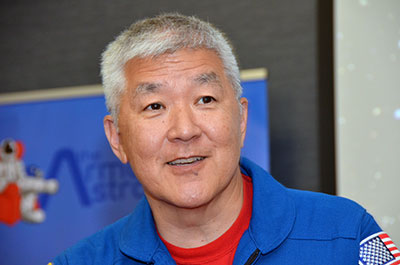 Thank you Dan for coming. It was a pleasure to meet you. And thank you Rowland (officially Dan's UK representative) for once again putting on an excellent event. If any reader should come across Dan Tani on their travels, I would highly recommend taking to time to get to know him a little bit, but with one caveat. Don't ever ask Dan to buy you boxer shorts! Don't take my word for it: just ask "Tonto" AKA Artemis II Mission Commander, Reid Wiseman. It's highly likely Dan will wear them before you do. A big shout out to Rowland's posse of volunteers that kept everything running seamlessly: a posse as far as I could gather comprised entirely of his family, even his mother-in-law! | 








 advertisement