If you have previously registered, but forgotten your password, click here.
Robert Pearlman
Morpheus suffers crash on first free-flight
After undergoing testing at the Johnson Space Center in Houston for nearly a year, NASA's Project Morpheus lander testbed arrived at the the Kennedy Space Center in Florida on July 27 to begin what was planned as about three months of tests.
Today (Aug. 9), during its first untethered free-flight, the vehicle lifted off the ground and then experienced a hardware failure, preventing it from maintaining stable flight.
"Failures such as these were anticipated prior to the test and are part of the development process for any complex spaceflight hardware. What we learn from these tests will help us build the best possible system in the future," NASA said in a statement.
No one was injured and the resulting fire was extinguished by KSC fire personnel. Engineers are looking into the incident and NASA will release information as it becomes available.
Morpheus is one of 20 small projects in the NASA Human Exploration and Operations Mission Directorate's Advanced Exploration Systems program. These projects pioneer approaches for rapidly developing prototype systems, demonstrating key new capabilities and validating operational concepts for future human missions beyond Earth orbit.
Robert Pearlman
Following the loss of the vehicle in July 2012, the Project Morpheus team returned to Johnson Space Center to build and restart testing with their "Bravo" vehicle.
The vehicle may look largely the same as the previous version, but there are numerous changes that have been incorporated. We have now implemented 70 different upgrades to the vehicle and ground systems to both address potential contributors to the test failure, and also to improve operability and maintainability.
The team is now almost ready to move the "Bravo" testbed back to Kennedy Space Center, where they will again attempt free flights.
On Friday (Nov. 1), the Morpheus team performed their second to last planned test flight with the Bravo vehicle at Johnson Space Center. Later this week, they anticipate conducting a Ground Take-Off and Landing (GTAL) test prior to shipping the testbed to Florida.
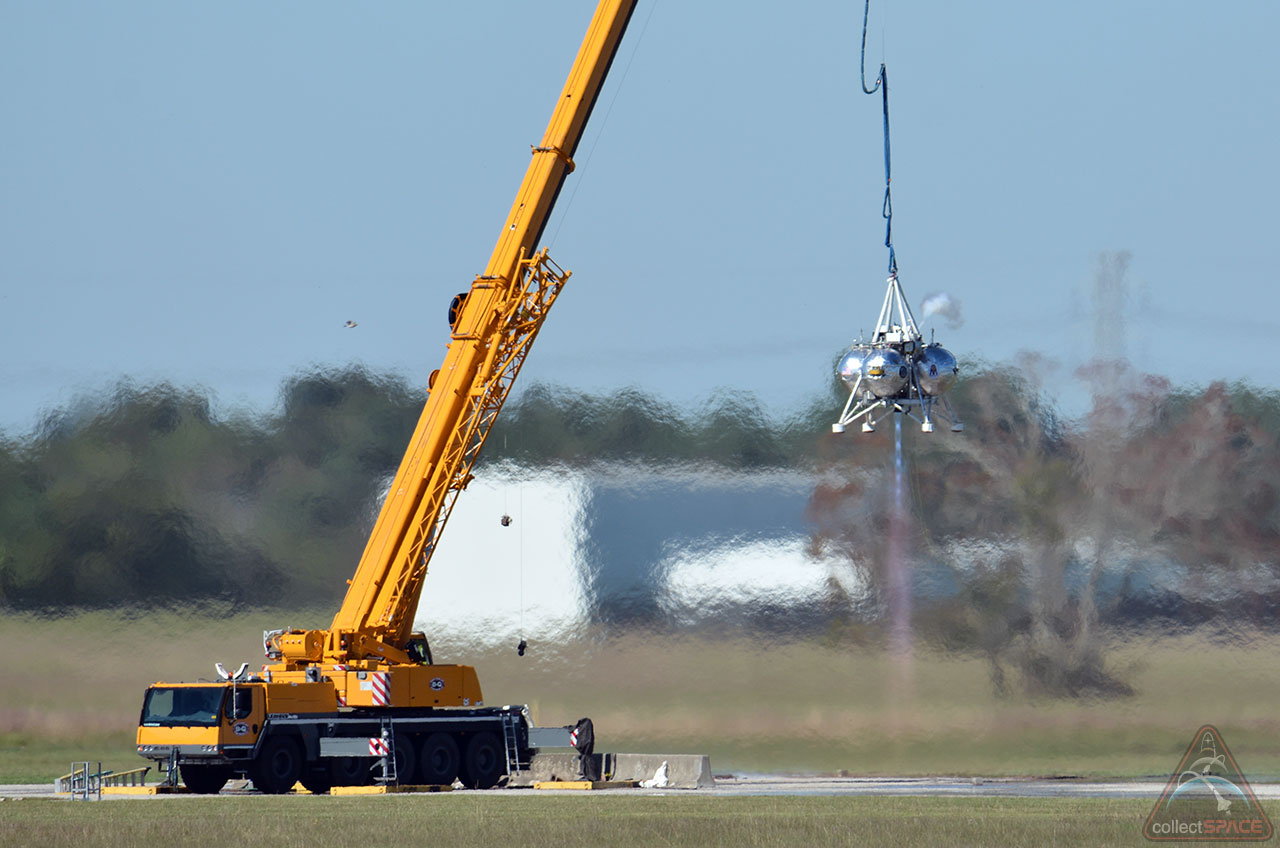
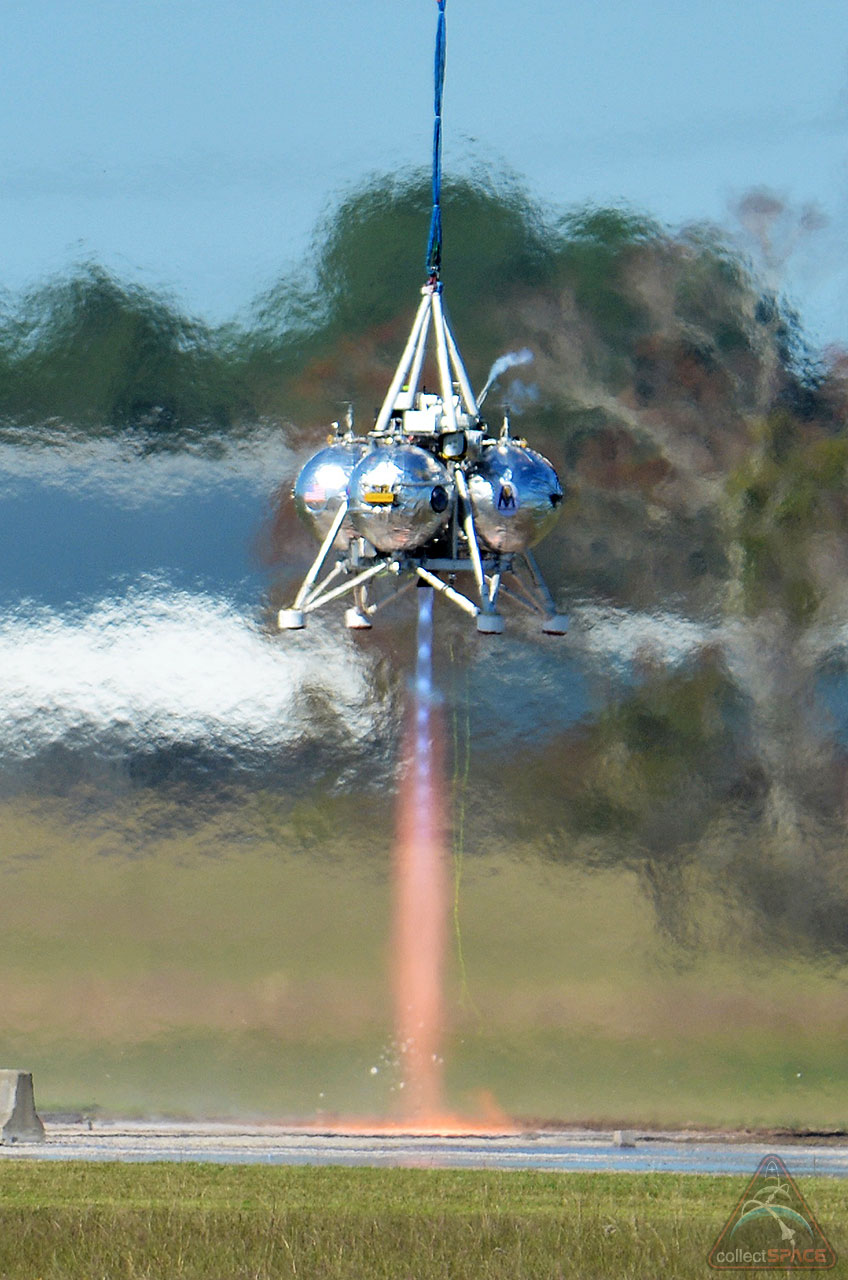
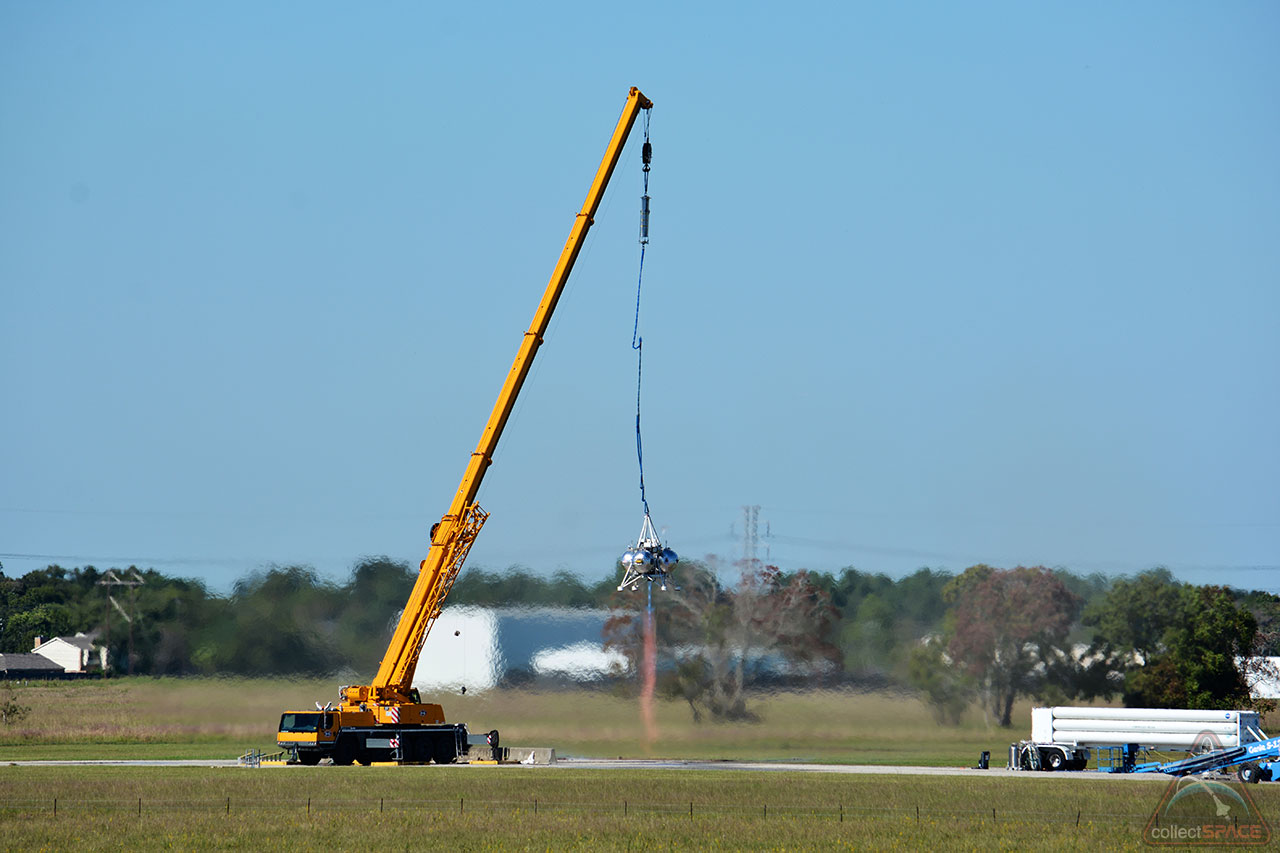
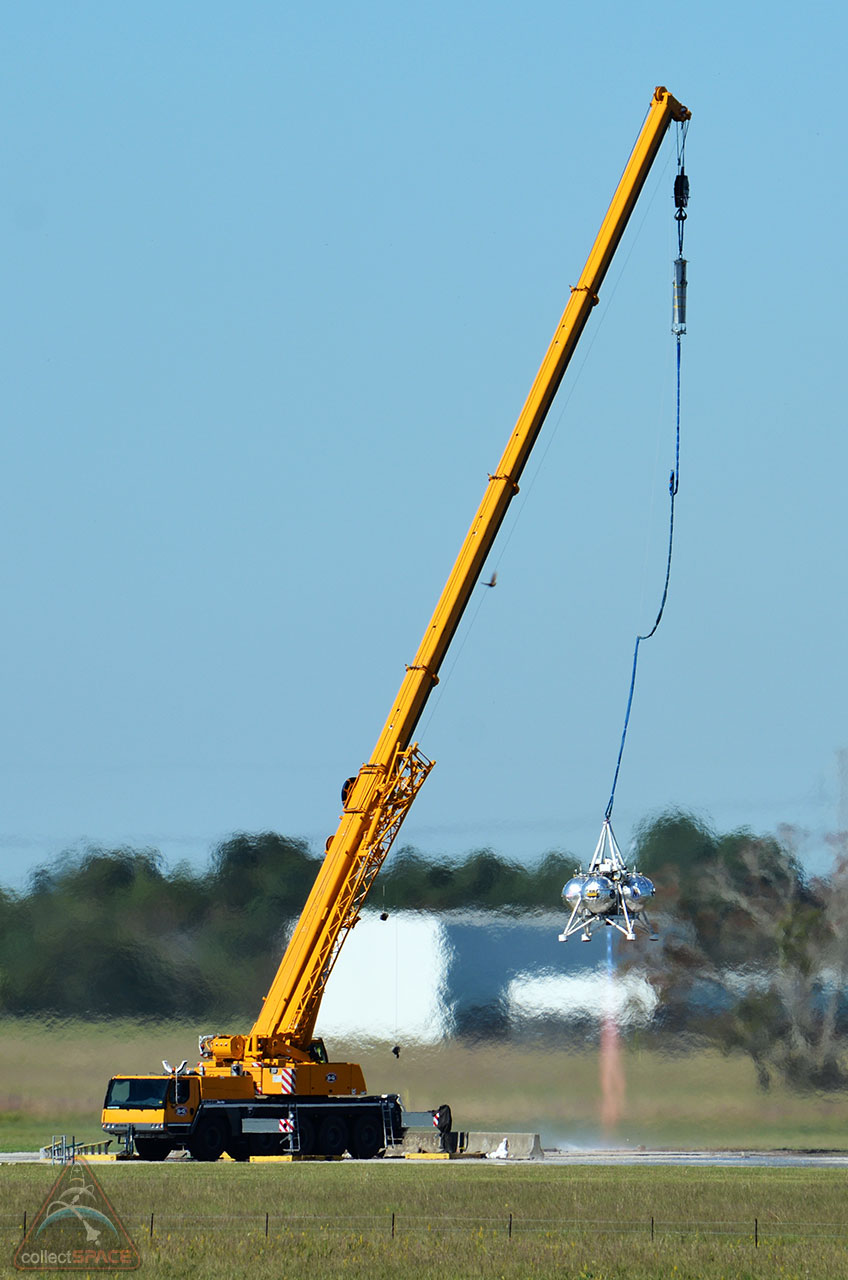
Here are photos from the Nov. 1 successful tether test:
Robert Pearlman
More photos from the Nov. 1 tether test:
Robert Pearlman
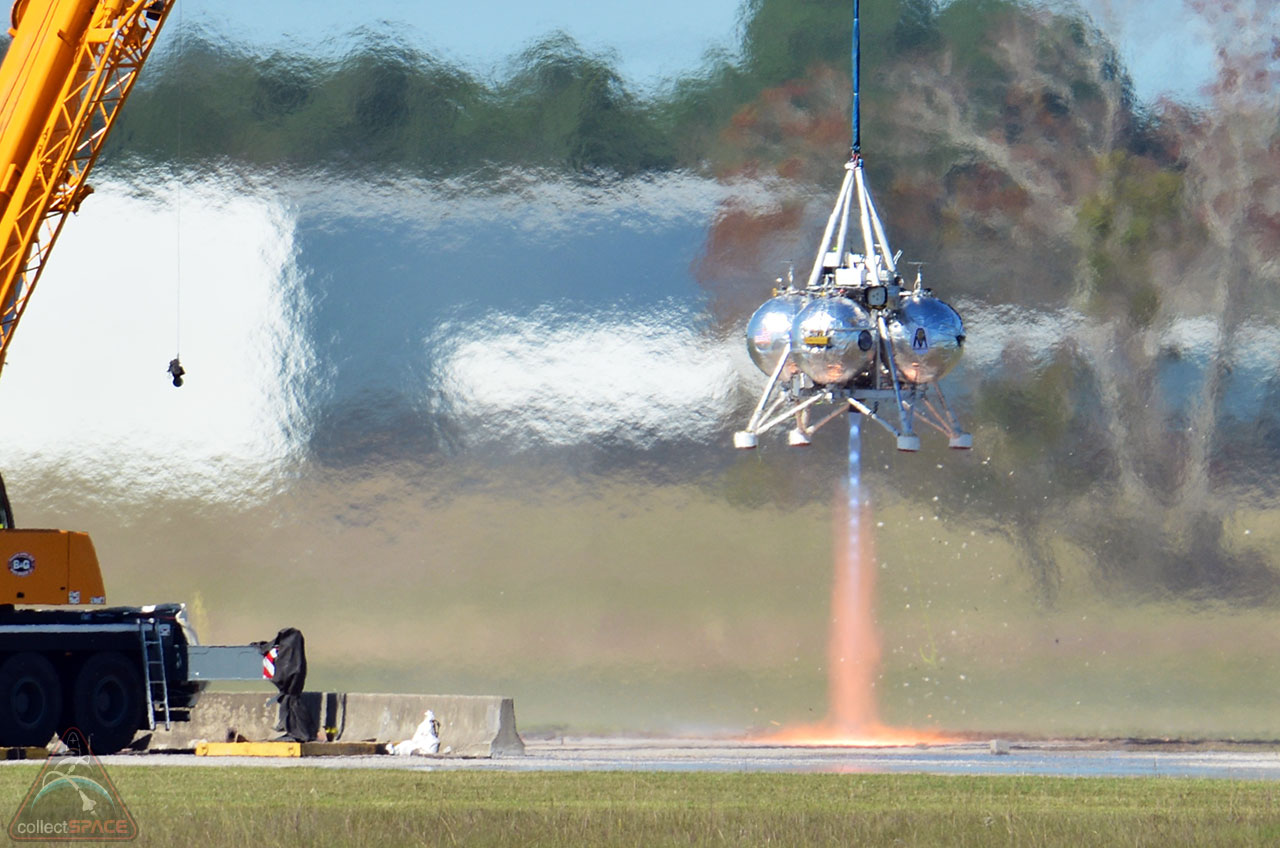
The Morpheus team successfully completed Tether Test 33 with the Bravo vehicle at Kennedy Space Center on Friday (Dec. 6). This test came after a long road trip for the vehicle from Johnson Space Center in Houston to Florida.
The flight was performed primarily to verify vehicle integrity in preparation for the first free flight of the Bravo vehicle, scheduled for Tuesday (Dec. 10).
Robert Pearlman
The Morpheus Team reports today's (Dec. 10) first free flight with the Bravo vehicle was a success.
The 54-second test began with the Morpheus lander launching from the ground over a flame trench and ascending approximately 50 feet, then hovering for about 15 seconds. The lander then flew forward and landed on its pad about 23 feet from the launch point.
Project Morpheus integrates NASA's automated landing and hazard avoidance technology (ALHAT) with an engine that runs on liquid oxygen and methane into a fully operational lander that could deliver cargo to asteroids and other planetary surfaces.
Robert Pearlman
Project Morpheus video release
The Morpheus Team successfully completed the first free flight of the Bravo vehicle at the Kennedy Space Center Shuttle Landing Facility December 10, 2013.
The vehicle flew its pre-planned trajectory flawlessly, which includes a 15m ascent, hover, a 7.5m lateral translation, and then landing within 6 inches of its intended target, for a total 54 second flight.
This test is the first in a series of free flights that will increase in altitude, distance and speed over the next few months.
Robert Pearlman
Project Morpheus video release
The Morpheus Team successfully completed the second free flight of the Bravo vehicle at the Kennedy Space Center's Shuttle Landing Facility on Tuesday, Dec. 17, 2013.
The vehicle flew its pre-planned trajectory flawlessly, landing within 3.5 inches of its intended target. Morpheus ascended from the ground over the flame trench to an altitude of about 164 feet (50m), after pausing at 82 feet (25m) to maintain the target ascent velocities.
The vehicle then flew forward, covering about 154 feet (47m) in 30 seconds, before descending and landing on a dedicated landing pad inside the ALHAT Hazard Field.
This was the team's highest and most ambitious test to date. As they continue free flights at KSC in January, they'll increase difficulty as they fly higher, farther and faster in 2014.
Robert Pearlman
Project Morpheus video release
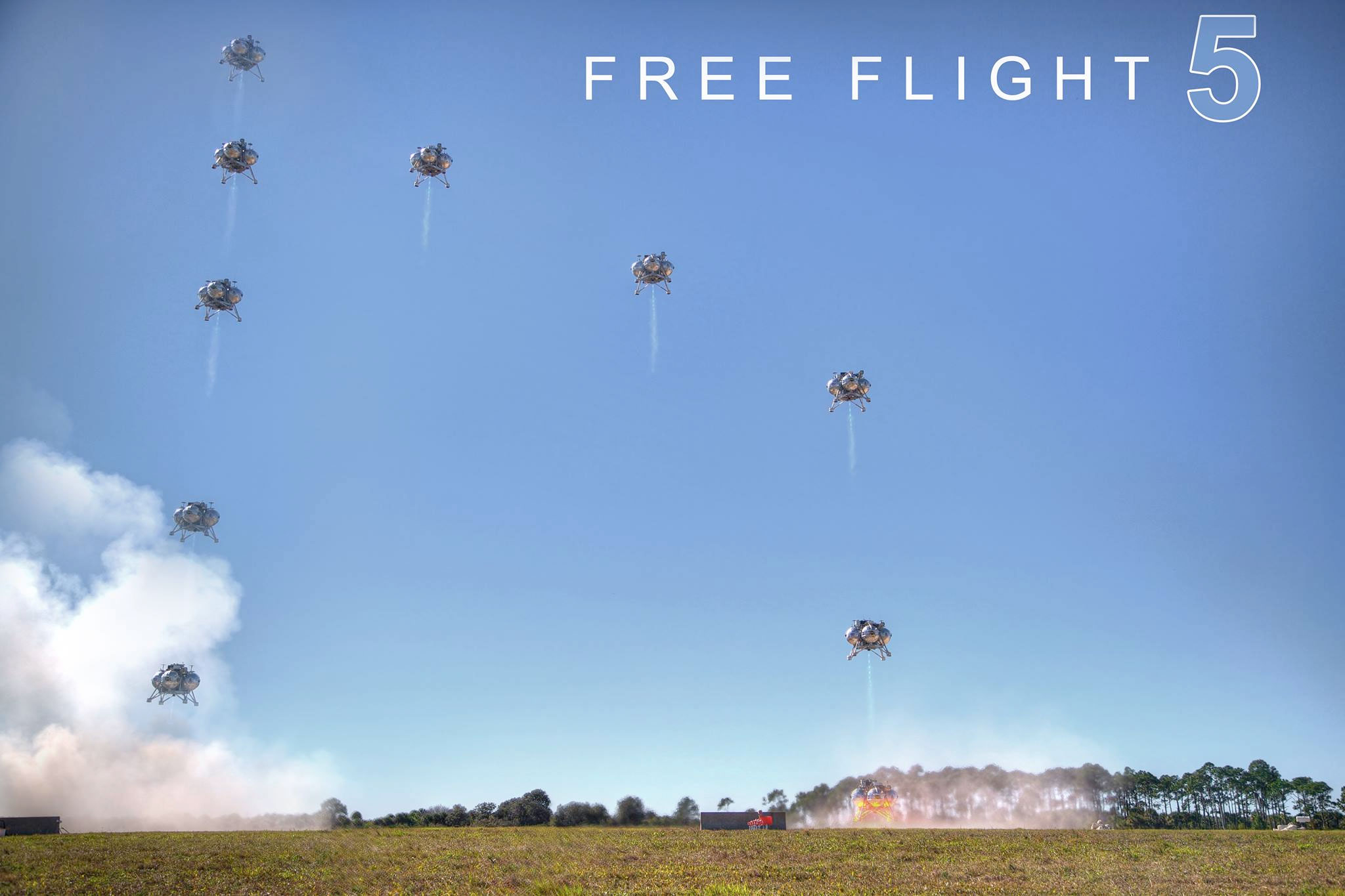
NASA's Morpheus Team successfully completed Free Flight 5 (FF5) at the Kennedy Space Center Shuttle Landing Facility (SLF) on Jan. 16, 2014.
FF5, the third free flight of Morpheus' Bravo vehicle, was higher and faster than all previous flights. Bravo vehicle flew its pre-planned trajectory flawlessly, ascending quickly to 57 m (187 ft), traversing 47 m (154 ft) while descending, then landing about 11 inches from the intended target in the Hazard Field about a minute after launch.
Robert Pearlman
Project Morpheus video release
The multi-center Morpheus Team successfully completed Free Flight 6 (FF6) at the Kennedy Space Center (KSC) Shuttle Landing Facility (SLF) on January 21, 2014.
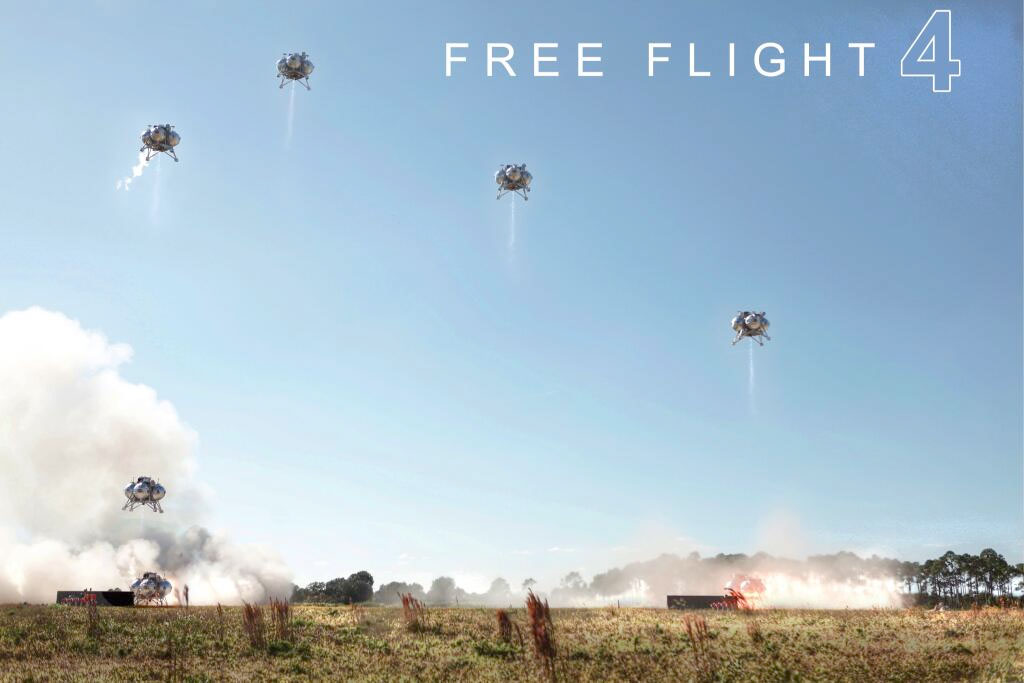
FF6, the fourth free flight of the Bravo vehicle, reached 93m (305ft) altitude, then traversed 109m (358ft) in 25 seconds before landing in the Hazard Field.
Bravo flew its pre-planned trajectory flawlessly, reaching a max ascent velocity of 11.4 m/s (25.5 mph), and landing within 0.38m (15") from its intended target 64 seconds after launch.
Landing was obscured by dust, as expected, due to the Shuttle crawler-way fines covering the landing pad, but telemetry data indicated the landing and engine shutdown were nominal.
Robert Pearlman
Project Morpheus video release
The multi-center Morpheus Team successfully completed Free Flight 7 (FF7) at the Kennedy Space Center (KSC) Shuttle Landing Facility (SLF) on Minday, February 10, 2014.
FF7, the fifth free flight of the Bravo vehicle, flew to 467 feet (142m), altitude and then traversed 637 feet (194m) in 30 seconds before landing in the hazard field.
Initial data indicated a nominal flight meeting all test objectives. The vehicle flew its pre-planned trajectory flawlessly, reaching a max ascent velocity of 13 m/s, and landing with no appreciable deviation from its intended target 74 seconds after launch.
See here for discussion of NASA's Morpheus vertical testbed vehicle.



 advertisement