If you have previously registered, but forgotten your password, click here.
The SuperDraco is an advanced version of the Draco engines currently used by SpaceX's Dragon spacecraft to maneuver on orbit and during reentry. As part of SpaceX's state-of-the-art launch escape system, eight SuperDraco engines built into the side walls of the Dragon spacecraft will produce up to 120,000 pounds of axial thrust to carry astronauts to safety should an emergency occur during launch.
NASA's Commercial Crew Program awarded SpaceX $75 million in April of last year to begin work developing the escape system in order to prepare the Dragon spacecraft to carry astronauts. Less than nine months later, SpaceX engineers have designed, built and tested the engine.
In a series of recent tests conducted at the company's Rocket Development Facility in McGregor, Texas, the SuperDraco sustained full duration, full thrust firing as well as a series of deep throttling demonstrations.
SpaceX's launch escape system has many advantages over past systems. It is inherently safer because it is not jettisoned like all other escape systems. This distinction provides astronauts with the unprecedented ability to escape from danger at any point during the launch, not just in the first few minutes. The eight SuperDracos provide redundancy, so that even if one engine fails an escape can still be carried out successfully.
SuperDracos can also be restarted multiple times if necessary and the engines will have the ability to deep throttle, providing astronauts with precise control and enormous power. In addition, as a part of a recoverable Dragon spacecraft, the engines can be used repeatedly, helping to advance SpaceX's long-term goal of making spacecraft more like airplanes, which can be flown again and again with minimal maintenance between flights.
Robert Pearlman
SpaceX release
Enter the Dragon, Please take your Seats
SpaceX Completes Important Commercial Crew Milestone
Recently, SpaceX completed an important milestone — the first NASA Crew Trial, one of two crew tests as part of SpaceX's work to build a prototype Dragon crew cabin.
For this milestone SpaceX demonstrated that our new crew cabin design will work well for astronauts in both nominal and off-nominal scenarios. It also provided our engineers with the opportunity to gain valuable feedback from both NASA astronauts and industry experts.
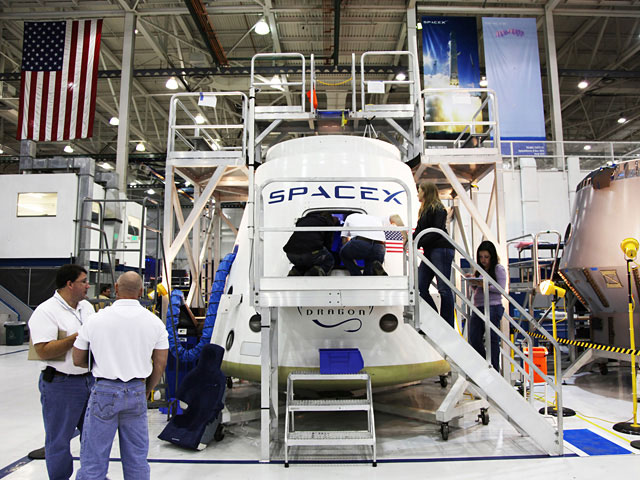
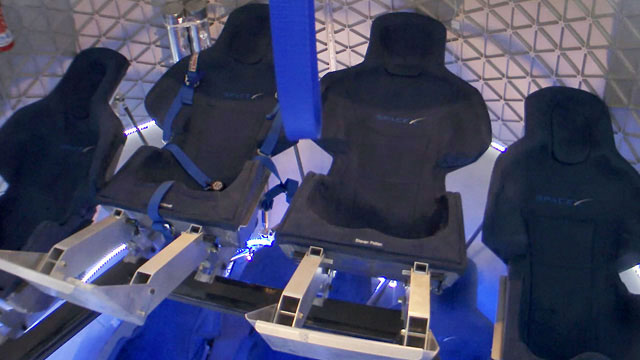
Above: SpaceX and NASA conducted a day-long review of the Dragon crew vehicle layout using the Dragon engineering model equipped with seats and representations of crew systems.
The engineering prototype includes seven crew seats as well as representations of crew accommodations such as lighting, life support and environmental control systems, displays, cargo racks, and other interior systems.
During the day-long test, SpaceX and NASA evaluators, including four NASA astronauts, participated in human factors assessments which covered entering and exiting Dragon under both normal and contingency cases, as well as reach and visibility evaluations.
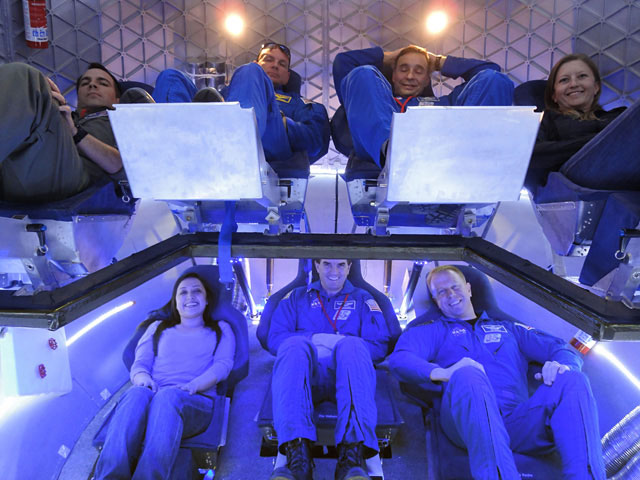
Above: The test crew included (from top left): NASA crew survival engineering team lead Dustin Gohmert, NASA astronauts Tony Antonelli and Lee Archambault, SpaceX mission operations engineer Laura Crabtree and thermal engineer Brenda Hernandez, and NASA astronauts Rex Walheim and Tim Kopra.
The seven seats mount to strong, lightweight supporting structures attached to the pressure vessel walls. Each seat can hold an adult up to 6 feet 5 inches tall, 250 pounds, and has a liner that is custom-fit for the crew member.
Above: With all seven crew members in their seats, Dragon has sufficient interior space for three additional people to stand and assist the crew with their launch preparations.
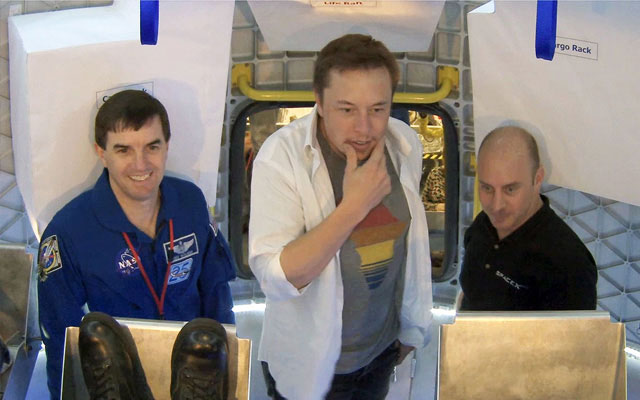
Above: NASA Astronaut Rex Walheim, SpaceX CEO and Chief Designer Elon Musk and SpaceX Commercial Crew Development Manager and former NASA Astronaut Garrett Reisman standing inside the Dragon spacecraft during testing activities.
In fact, Dragon has so much interior volume, that we could place an entire three-person Russian Soyuz capsule descent module inside Dragon's pressure vessel.
Robert Pearlman
SpaceX release
SpaceX Announces Independent Safety Advisory Panel for Commercial Crew
Industry Leaders Lend Expertise As Company Prepares for Astronaut Flights
Today, Space Exploration Technologies (SpaceX), one of the leading private companies working to restore America's ability to carry astronauts to the Space Station, announced it has assembled a team of outside experts to help the company create the world's safest human spaceflight system.
"When it comes to manned spaceflight, safety is our top priority," said SpaceX CEO and Chief Designer, Elon Musk. "These experts will provide us with important insights as we prepare to carry astronauts on the next generation of American spacecraft."
The independent Safety Advisory Panel is composed of leading human spaceflight safety experts, including several former NASA astronauts and senior NASA officials. The panel will provide objective assessments of the safety of the Dragon spacecraft and Falcon 9 rocket to help SpaceX maintain the highest level of safety.
Among the experts joining the SpaceX Safety Advisory Panel are:
Dr. Leroy Chiao, PhD, Former NASA astronaut, Former International Space Station commander, member of the Augustine Commission (Review of United States Human Spaceflight Plans Committee).
Dr. G. Scott Hubbard, Former Director of NASA Ames Research Center, Stanford University professor of aeronautics and astronautics, sole NASA representative on the Columbia Accident Investigation Board.
Dr. Richard T. Jennings, MD, MS, Former Chief of Medicine for NASA Johnson Space Center, University of Texas Medical Branch professor at the Aerospace Medicine Center.
Captain Mark Kelly, Former NASA astronaut, Former Space Shuttle commander, Retired Navy Captain.
Dr. Edward Lu, PhD, Former NASA astronaut.
The panel will convene in the fall of 2012 and will continue its work well after SpaceX begins flying people to space.
Robert Pearlman
SpaceX release
NASA Commercial Partner SpaceX Completes Crew Accommodations Milestone
Space Exploration Technologies (SpaceX) has finished an important evaluation of a prototype Dragon spacecraft designed to carry people into orbit. This key milestone is part of SpaceX's partnership with NASA under a funded Space Act Agreement to advance the design of crew transportation vehicles.
The primary goal of the tests was to determine whether the layout will allow astronauts to maneuver effectively in the vehicle. Several veteran space shuttle astronauts and NASA engineers conducted the evaluation during a pair of two-day-long reviews.
"I am very pleased with the progress SpaceX and our other commercial partners are making during the CCDev2 effort," said NASA Commercial Spaceflight Director Philip McAlister. "Together with NASA's development of beyond low-Earth orbit systems, commercial crew and cargo transportation is an integral part of our overall human spaceflight program."
As part of the Commercial Crew Development Round 2, or CCDev2, agreement, the company invited the astronauts and engineers to its headquarters in Hawthorne, Calif., to conduct the evaluation. The prototype was equipped with seats, lighting, environmental control and life support systems, conceptual displays and controls, cargo racks and other interior systems.
"This milestone demonstrated the layout of the crew cabin supports critical tasks," said SpaceX Commercial Crew Development Manager Garrett Reisman. "It also demonstrated the Dragon interior has been designed to maximize the ability of the seven-member crew to do their job as effectively as possible."
During the reviews, space shuttle veterans Rex Walheim, Tony Antonelli, Eric Boe and Tim Kopra participated in so-called "human factor assessments." This included entering and exiting Dragon under normal and emergency scenarios. They also performed reach and visibility evaluations.
"As an anchor customer for commercial transportation services, we are happy to provide SpaceX with knowledge and lessons learned from our 50 years of human spaceflight," said Commercial Crew Program Manager Ed Mango. "We appreciate the opportunity SpaceX gave us to provide feedback on these critical interior systems while the company maintains its flexibility to appeal to other customers."
This is the seventh of 10 milestones SpaceX must meet under the CCDev2 agreement, which continues through July 31. This includes the development of a launch abort system for crew escape during launch or ascent.
Robert Pearlman
SpaceX release
NASA Commercial Partner SpaceX Completes Dragon Design Review
NASA partner Space Exploration Technologies, or SpaceX, has completed an important design review of the crewed version of its Dragon spacecraft. The concept baseline review presented NASA with the primary and secondary design elements of its Dragon capsule designed to carry astronauts into low Earth orbit, including the International Space Station.
SpaceX is one of several companies working to develop crew transportation capabilities under the Commercial Crew Development Round 2 (CCDev2) agreement with NASA's Commercial Crew Program (CCP). Through CCDev2, NASA is helping the private sector develop and test new spacecraft and rockets with the goal of making commercial human spaceflight services available to commercial and government customers.
In the June 14 review conducted at the company's headquarters in Hawthorne, Calif., SpaceX provided details about each phase of a potential crewed mission. This included how the company plans to modify its launch pads to support such missions, Dragon's docking capabilities, the weight and power requirements for the spacecraft, and prospective ground landing sites and techniques. The company also outlined crew living arrangements, such as environmental control and life support equipment, displays and controls.
"SpaceX has made significant progress on its crew transportation capabilities," NASA CCP Manager Ed Mango said. "We commend the SpaceX team on its diligence in meeting its CCDev2 goals to mature the company's technology as this nation continues to build a real capability for America's commercial spaceflight needs."
Safety was a key focus of the review. The SpaceX team presented NASA with analyses on how its SuperDraco launch abort system would perform if an emergency were to occur during launch or ascent. The review also outlined plans for getting astronauts away from danger quickly and safely on the way to low Earth orbit, in space and during the return home.
"The successful conclusion of the concept baseline review places SpaceX exactly where we want to be — ready to move on to the next phase and on target to fly people into space aboard Dragon by the middle of the decade," said SpaceX CEO and Chief Designer Elon Musk.
Robert Pearlman
SpaceX release
NASA selects SpaceX to return Americans to space
Space Exploration Technologies (SpaceX) today won a $440 million contract with NASA to develop the successor to the Space Shuttle and transport American astronauts into space.
"This is a decisive milestone in human spaceflight and sets an exciting course for the next phase of American space exploration," said SpaceX CEO and Chief Designer Elon Musk. "SpaceX, along with our partners at NASA, will continue to push the boundaries of space technology to develop the safest, most advanced crew vehicle ever flown."
SpaceX expects to undertake its first manned flight by 2015 — a timetable that capitalizes on the proven success of the company's Falcon 9 rocket and Dragon spacecraft combination. While Dragon is initially being used to transport cargo to the International Space Station, both Dragon and Falcon 9 were designed from the beginning to carry crew.
Under the Commercial Crew Integrated Capability (CCiCap) initiative's base period, SpaceX will make the final modifications necessary to prepare Dragon to safely transport astronauts into space. These include:
Seats for seven astronauts.
The most technically advanced launch escape system ever developed, with powered abort possibilities from launch pad to orbit. SpaceX will demonstrate that Dragon will be able to escape a launch-pad emergency by firing integrated SuperDraco engines to carry the spacecraft safely to the ocean. SpaceX will also conduct an in-flight abort test that allows Dragon to escape at the moment of maximum aerodynamic drag, again by firing the SuperDraco thrusters to carry the spacecraft a safe distance from the rocket.
A breakthrough propulsive landing system for gentle ground touchdowns on legs.
Refinements and rigorous testing of essential aspects of Dragon's design, including life-support systems and an advanced cockpit design complete with modern human interfaces.
SpaceX will perform stringent safety and mission-assurance analyses to demonstrate that all these systems meet NASA requirements.
With a minimal number of stage separations, all-liquid rocket engines that can be throttled and turned off in an emergency, engine-out capability during ascent, and powered abort capability all the way to orbit, the Falcon 9-Dragon combination will be the safest spacecraft ever developed.
Robert Pearlman
NASA release
NASA Commercial Crew Partner SpaceX Completes Two Human-Critical Reviews
Space Exploration Technologies Corp. (SpaceX) of Hawthorne, Calif., recently completed two milestones for NASA's Commercial Crew Integrated Capability (CCiCap) initiative, which is intended to make commercial human spaceflight services available for government and commercial customers.
These were the fifth and sixth milestones for SpaceX, a partner in NASA's Commercial Crew Program (CCP). The company is on track to complete all 14 of its CCiCap milestones by mid-2014.
In a human certification plan review May 7, SpaceX outlined all the steps the company plans to take to certify its system for crewed missions, including testing, demonstrations, analyses, inspections, verifications and training events. This was a key milestone to ensure SpaceX's integrated Falcon 9 rocket and Dragon capsule will be safe to carry humans to and from low-Earth orbit beginning in the middle of this decade.
At its pad abort test review, SpaceX presented plans for a pad abort test, currently targeted for later this year or early next year from Cape Canaveral Air Force Station's Space Launch Complex 40 in Florida. The review successfully demonstrated the adequacy of the test plan objectives and the pad abort scenario.
"The beauty of having the pad abort test review was it allowed both NASA and SpaceX to start coalescing toward an understanding of what will be tested and how we'll measure success," said Ed Mango, NASA's CCP manager. "We're really looking forward to seeing SpaceX's pad abort system take off from along Florida's Space Coast."
During the upcoming pad abort test, SpaceX will perform a recovery operation following a simulated Falcon 9 anomaly. Plans call for the company to put one of its Dragon capsules on a launch pad test stand, countdown to T-0, ignite the system's SuperDraco abort engines and initiate a separation command. At around 5,000 feet, the spacecraft's parachutes will deploy resulting in a splashdown in the Atlantic Ocean.
Robert Pearlman
NASA release
NASA Commercial Crew Partner SpaceX Completes Orbit and Entry Review
NASA Commercial Crew Program (CCP) partner Space Exploration Technologies (SpaceX) recently reviewed the systems critical to sustaining crews in orbit and returning them safely to Earth aboard the company's Dragon spacecraft.
SpaceX is one of three commercial space companies working under NASA's Commercial Crew Integrated Capability (CCiCap) initiative to develop spaceflight capabilities that eventually could provide launch services to transport NASA astronauts to the International Space Station from U.S. soil.
During the preliminary design review at SpaceX headquarters in Hawthorne, Calif., company engineers presented NASA representatives and aerospace industry experts detailed analyses of Dragon systems critical to keeping crews safe in orbit and during re-entry operations. From basic life support functions, including pressurizing Dragon with breathable air, to stocking the capsule with enough food and water for as many as seven crew members, the spacecraft must be designed to protect humans in the harsh conditions of space. Company designers and NASA engineers dissected the plans carefully to make sure no details were overlooked.
"NASA has learned a lot about keeping our astronaut crews safe throughout a mission, and we don't want those lessons to be forgotten," said Ed Mango, NASA's CCP manager. "So, we're sharing a lot of what we already know, and the company is adding its own innovations to suit its needs and meet its challenges."
The review detailed equipment and software aboard Dragon that would help guide crews to the International Space Station for rendezvous and docking operations. This included discussion on SpaceX’s planning for software code which, in this modern era of spaceship design, just as critical as the hardware design. The company also described how the spacecraft will be operated both by its onboard crew and by ground controllers.
While SpaceX works to further develop its crewed Dragon spacecraft, it also is preparing for the upcoming launch of the third of at least 12 cargo missions to the space station with a remotely controlled Dragon under NASA's Commercial Resupply Services contract.
"SpaceX’s Dragon spacecraft was designed from the outset to accommodate the upgrades necessary to safely carry people, so we’re excited to have reached the halfway point in our agreement with NASA to design those features,” said Gwynne Shotwell, SpaceX president and chief operating officer. “As we leverage our experience successfully delivering cargo both to the International Space Station and back to Earth, SpaceX remains committed to providing the safest manned flights ever conducted."
In December, the company completed preliminary design reviews covering the ground systems and ascent, which are the first two phases of flight. Completion of the orbit and entry review clears the way for SpaceX to proceed with detailed designs for its integrated space transportation system, comprised of its Dragon spacecraft, Falcon 9 rocket and supporting ground systems.
The review was the seventh milestone for SpaceX under CCiCap. The company is on track to complete all 15 of its CCiCap milestones by the summer of 2014. All of NASA's industry partners, including SpaceX, continue to meet their established milestones in developing commercial crew transportation capabilities.
Robert Pearlman
NASA release
NASA Commercial Crew Partner SpaceX Tests Dragon Parachute System
Engineers and safety specialists from NASA and Space Exploration Technologies (SpaceX) gathered in Morro Bay, Calif., in late December to demonstrate how the company's Dragon spacecraft's parachute system would function in the event of an emergency on the launch pad or during ascent.
The test was part of an optional milestone under NASA's Commercial Crew Integrated Capability (CCiCap) initiative and approved by the agency in August. Through the Commercial Crew Program, SpaceX is one of NASA's commercial partners working to develop a new generation of U.S. spacecraft and rockets capable of transporting humans to and from low-Earth orbit from American soil. NASA intends to use such commercial systems to fly U.S. astronauts to and from the International Space Station.
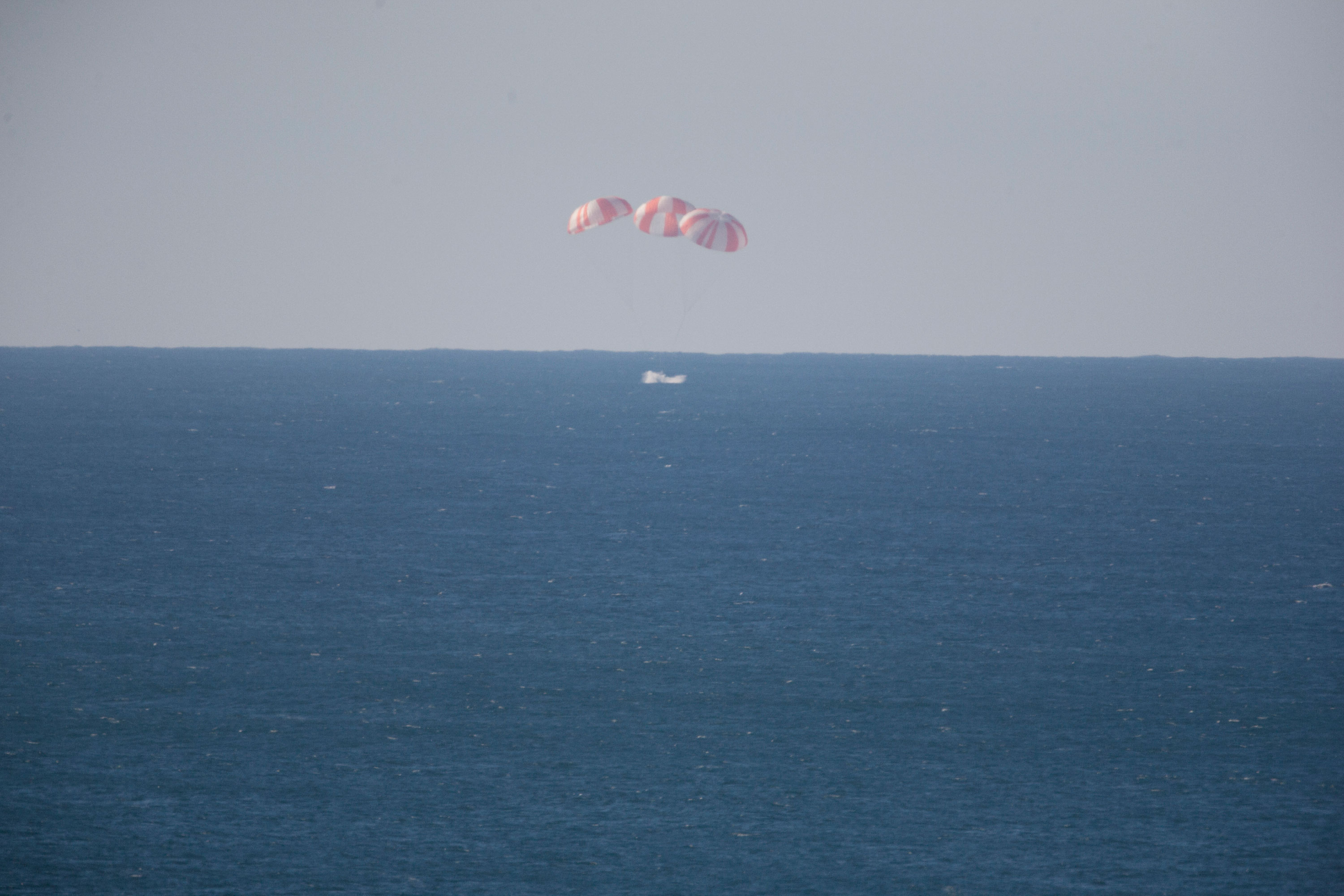
The 12,000-pound test craft was lifted 8,000 feet above sea level by an Erickson Sky Crane helicopter and flown over the Pacific Ocean. Following Dragon's release, two drogue parachutes were released from the top of the spacecraft to slow its decent, before the three main parachutes deployed. The craft splashed down and was quickly recovered by the Sky Crane and carried back to shore.
"The parachute test is essential for the commercial crew effort because it helps us better understand how SpaceX's system performs as it safely returns crew," said Jon Cowart, NASA Partner Integration deputy manager working with SpaceX. "Like all of our partners, SpaceX continues to provide innovative solutions based on NASA's lessons learned that could make spaceflight safer."
During a normal spacecraft landing, the parachutes will be aided by the Dragon’s SuperDraco thrusters to provide a soft controlled landing. This redundancy on both the parachutes and thrusters is designed to ensure safe landings for crews.
"SpaceX is working diligently to make the Dragon spacecraft the safest vehicle ever flown," said Gwynne Shotwell, president of SpaceX. "The parachute system is an integral part of Dragon’s ability to provide a safe landing for nominal and abort conditions -- with this successful test we are well-positioned to execute a full end-to-end test of the launch escape system later this year."
The parachute test puts SpaceX a step closer to launch abort system tests. The company currently is manufacturing the spacecraft and rocket to be used for these flight tests.
SpaceX is on track to complete all 15 of its CCiCap milestones in 2014. All of NASA's industry partners, including SpaceX, continue to meet their established milestones in developing commercial crew transportation capabilities.
Robert Pearlman
SpaceX release
SpaceX Completes Qualification Testing of SuperDraco Thruster
Thruster to Power Revolutionary Launch Escape System on Dragon Spacecraft
Space Exploration Technologies Corp. (SpaceX) announced today that it has completed qualification testing for the SuperDraco thruster, an engine that will power the Dragon spacecraft's launch escape system and enable the vehicle to land propulsively on Earth or another planet with pinpoint accuracy.
The qualification testing program took place over the last month at SpaceX's Rocket Development Facility in McGregor, Texas. The program included testing across a variety of conditions including multiple starts, extended firing durations and extreme off-nominal propellant flow and temperatures.
The SuperDraco is an advanced version of the Draco engines currently used by SpaceX's Dragon spacecraft to maneuver in orbit and during re-entry. SuperDracos will be used on the crew version of the Dragon spacecraft as part of the vehicle's launch escape system; they will also enable propulsive landing on land. Each SuperDraco produces 16,000 pounds of thrust and can be restarted multiple times if necessary. In addition, the engines have the ability to deep throttle, providing astronauts with precise control and enormous power.
The SuperDraco engine chamber is manufactured using state-of-the-art direct metal laser sintering (DMLS), otherwise known as 3D printing. The chamber is regeneratively cooled and printed in Inconel, a high-performance superalloy that offers both high strength and toughness for increased reliability.
"Through 3D printing, robust and high-performing engine parts can be created at a fraction of the cost and time of traditional manufacturing methods," said Elon Musk, Chief Designer and CEO. "SpaceX is pushing the boundaries of what additive manufacturing can do in the 21st century, ultimately making our vehicles more efficient, reliable and robust than ever before."
Unlike previous launch escape systems that were jettisoned after the first few minutes of launch, SpaceX's launch system is integrated into the Dragon spacecraft. Eight SuperDraco engines built into the side walls of the Dragon spacecraft will produce up to 120,000 pounds of axial thrust to carry astronauts to safety should an emergency occur during launch.
As a result, Dragon will be able to provide astronauts with the unprecedented ability to escape from danger at any point during the ascent trajectory, not just in the first few minutes. In addition, the eight SuperDracos provide redundancy, so that even if one engine fails an escape can still be carried out successfully.
The first flight demonstration of the SuperDraco will be part of the upcoming pad abort test under NASA's Commercial Crew Integrated Capabilities (CCiCap) initiative. The pad abort will be the first test of SpaceX's new launch escape system and is currently expected to take place later this year.
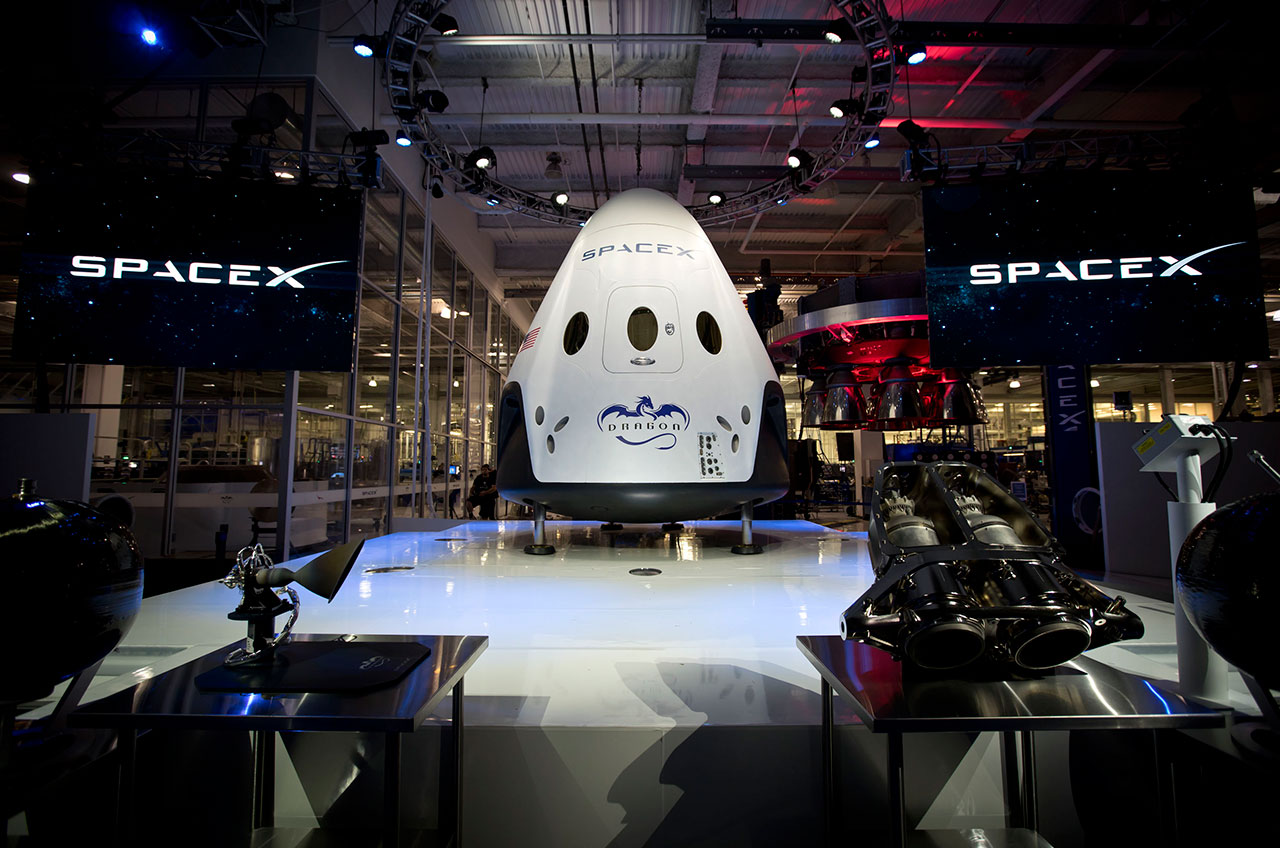
Revealing what he described as a "21st century spaceship," Elon Musk unveiled SpaceX's Dragon V2, the commercial spaceflight company's first spacecraft designed to fly astronauts, during an event held Thursday night (May 29).
"There you have it, Dragon Version 2," the billionaire CEO and chief designer told an audience of employees, invited guests, and media gathered at the company's Hawthorne, California headquarters. "[It is] capable of carrying up to seven astronauts, propulsively landing almost anywhere in the world, and is designed to be fully reusable so you can fly it multiple times, allowing a potential dramatic reduction to the cost of access to space."
The streamlined space capsule, intended as an upgrade to the company's current Dragon used to deliver cargo to and from the International Space Station, features a flat-panel dashboard, leather-lined bucket seats, the world's first 3-D printed engine and landing legs.
"We wanted to take a big step in technology," said Musk, explaining that they wanted to "create something that was a step change in spacecraft technology."
Robert Pearlman
NASA release
SpaceX Completes First Milestone for Commercial Crew Transportation System
NASA has approved the completion of SpaceX's first milestone in the company's path toward launching crews to the International Space Station (ISS) from U.S. soil under a Commercial Crew Transportation Capability (CCtCap) contract with the agency.
During the Certification Baseline Review, SpaceX described its current design baseline including how the company plans to manufacture its Crew Dragon spacecraft and Falcon 9 v.1.1 rocket, then launch, fly, land and recover the crew. The company also outlined how it will achieve NASA certification of its system to enable transport of crews to and from the space station.
"This milestone sets the pace for the rigorous work ahead as SpaceX meets the certification requirements outlined in our contract," said Kathy Lueders, manager of NASA's Commercial Crew Program. "It is very exciting to see SpaceX's proposed path to certification, including a flight test phase and completion of the system development."
On Sept. 16, the agency unveiled its selection of SpaceX and Boeing to transport U.S. crews to and from the space station using their Crew Dragon and CST-100 spacecraft, respectively. These contracts will end the nation's sole reliance on Russia and allow the station's current crew of six to increase, enabling more research aboard the unique microgravity laboratory.
Under the CCtCap contracts, the companies will complete NASA certification of their human space transportation systems, including a crewed flight test with at least one NASA astronaut aboard, to verify the fully integrated rocket and spacecraft system can launch from the United States, maneuver in orbit, and dock to the space station, and validate its systems perform as expected.
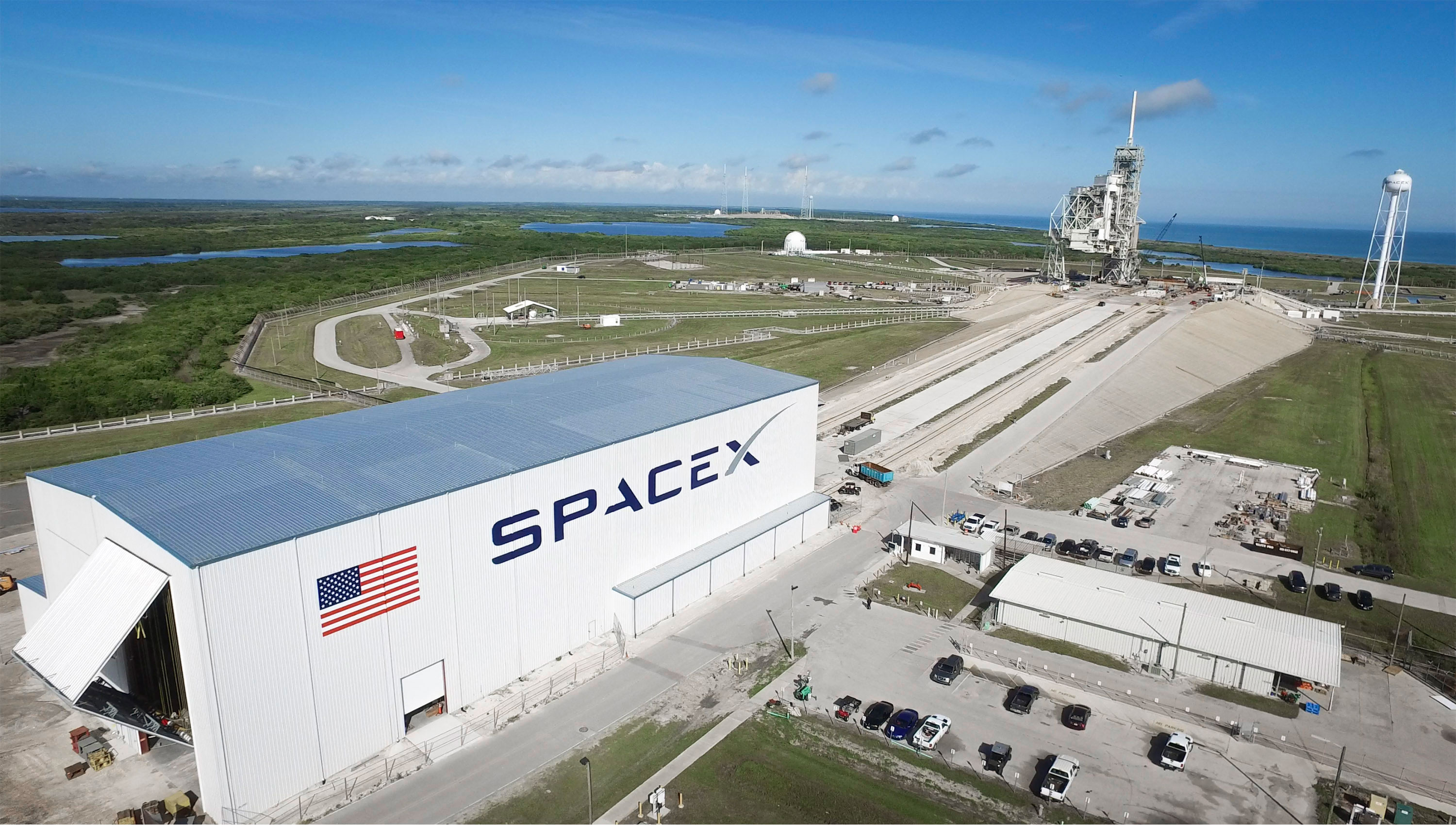
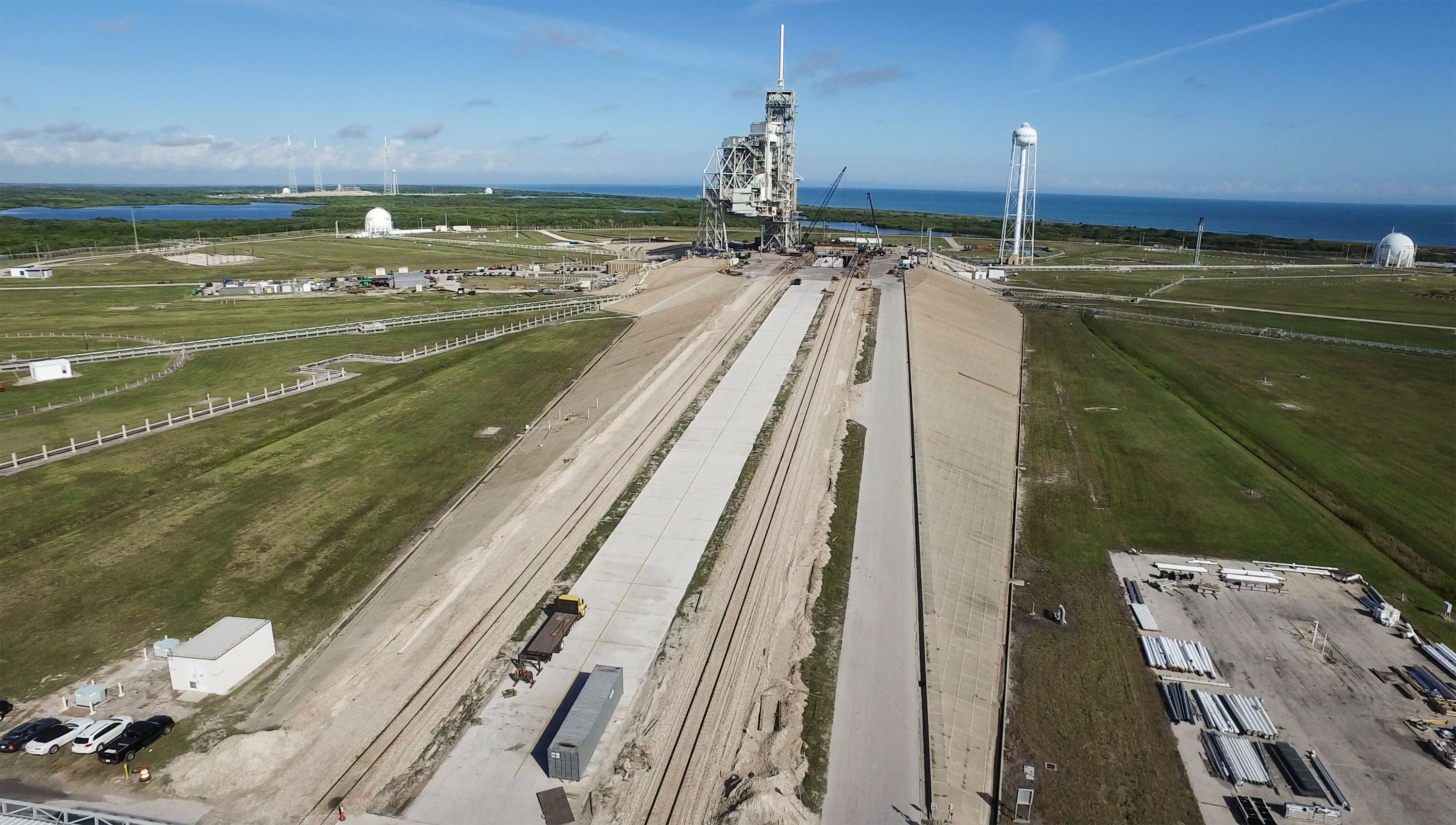
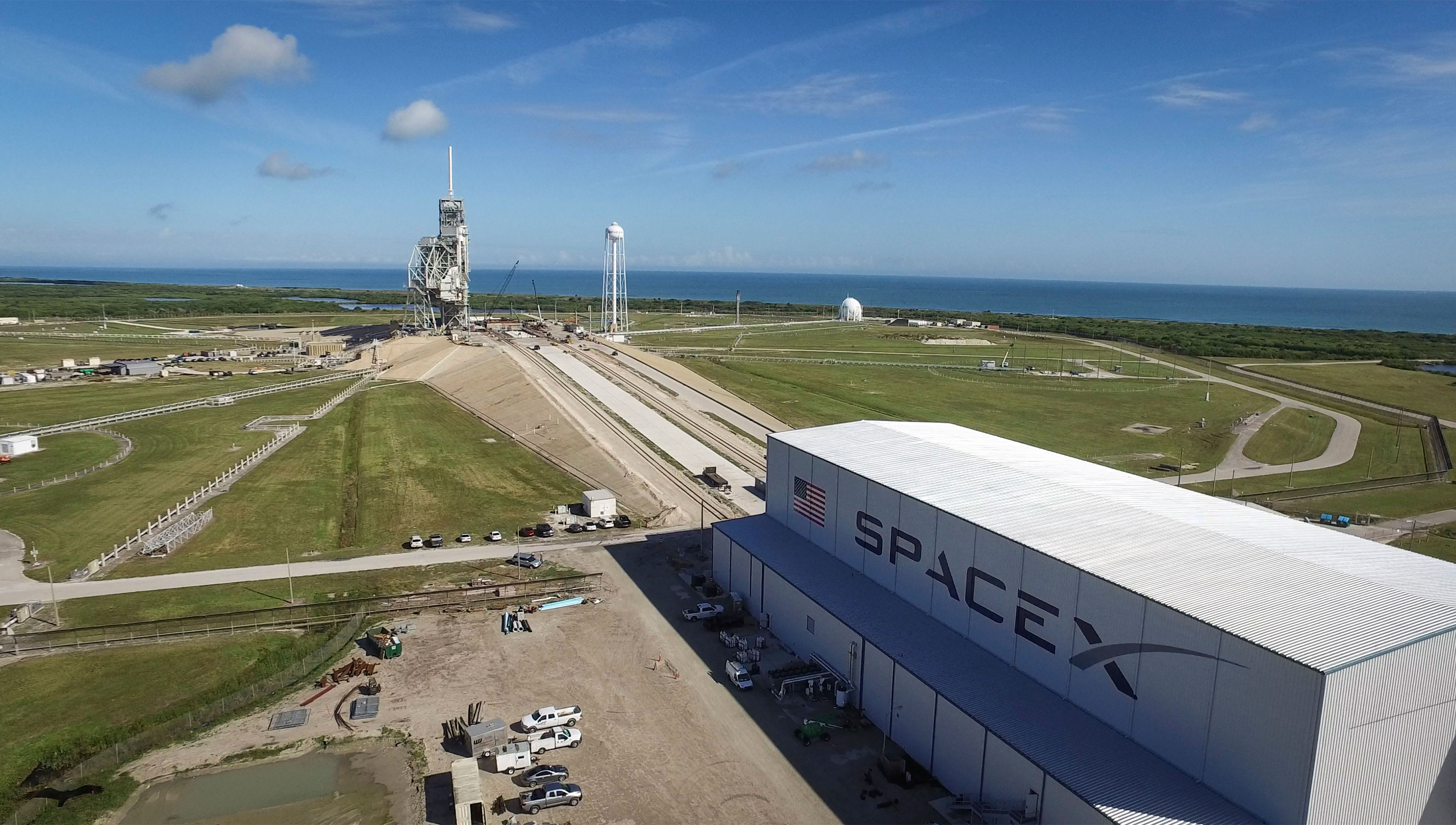
Throughout the next few years, SpaceX will test its systems, materials and concept of operations to the limits to prove they are safe to transport astronauts to the station. Once certified, the Crew Dragon spacecraft and Falcon 9 v1.1 rocket will be processed and integrated inside a new hangar before being rolled out for launch. This will all take place at the historic Launch Complex 39A at NASA's Kennedy Space Center in Florida.
The Crew Dragon is expected to be able to dock to the station for up to 210 days and serve as a 24-hour safe haven during an emergency in space.
"SpaceX designed the Dragon spacecraft with the ultimate goal of transporting people to space," said Gwynne Shotwell, SpaceX President and Chief Operating Officer. "Successful completion of the Certification Baseline Review represents a critical step in that effort — we applaud our team's hard work to date and look forward to helping NASA return the transport of U.S. astronauts to American soil."
Robert Pearlman
NASA release
NASA Orders SpaceX Crew Mission to International Space Station
NASA took a significant step Friday (Nov. 20) toward expanding research opportunities aboard the International Space Station with its first mission order from Hawthorne, California based-company SpaceX to launch astronauts from U.S. soil.
This is the second in a series of four guaranteed orders NASA will make under the Commercial Crew Transportation Capability (CCtCap) contracts. The Boeing Company of Houston received its first crew mission order in May.
"It's really exciting to see SpaceX and Boeing with hardware in flow for their first crew rotation missions," said Kathy Lueders, manager of NASA's Commercial Crew Program. "It is important to have at least two healthy and robust capabilities from U.S. companies to deliver crew and critical scientific experiments from American soil to the space station throughout its lifespan."
Determination of which company will fly its mission to the station first will be made at a later time. The contracts call for orders to take place prior to certification to support the lead time necessary for missions in late 2017, provided the contractors meet readiness conditions.
Commercial crew missions to the space station, on the Boeing CST-100 Starliner and SpaceX Crew Dragon spacecraft, will restore America's human spaceflight capabilities and increase the amount of time dedicated to scientific research aboard the orbiting laboratory.
SpaceX's crew transportation system, including the Crew Dragon spacecraft and Falcon 9 rocket, has advanced through several development and certification phases. The company recently performed a critical design review, which demonstrated the transportation system has reached a sufficient level of design maturity to work toward fabrication, assembly, integration and test activities.
"The authority to proceed with Dragon's first operational crew mission is a significant milestone in the Commercial Crew Program and a great source of pride for the entire SpaceX team," said Gwynne Shotwell, president and chief operating office of SpaceX. "When Crew Dragon takes NASA astronauts to the space station in 2017, they will be riding in one of the safest, most reliable spacecraft ever flown. We're honored to be developing this capability for NASA and our country."
Commercial crew launches will reduce the cost, per seat, of transporting NASA astronauts to the space station compared to what the agency must pay the Russian Federal Space Agency for the same service. If, however, NASA does not receive the full requested funding for CCtCap contracts in fiscal year 2016 and beyond, the agency will be forced to delay future milestones for both U.S. companies and continue its sole reliance on Russia to transport American astronauts to the space station.
Orders under the CCtCap contracts are made two to three years prior to actual mission dates in order to provide time for each company to manufacture and assemble the launch vehicle and spacecraft. Each company also must successfully complete a certification process before NASA will give the final approval for flight. Each contract includes a minimum of two and a maximum potential of six missions.
A standard commercial crew mission to the station will carry up to four NASA or NASA-sponsored crew members and about 220 pounds of pressurized cargo. The spacecraft will remain at the station for up to 210 days, available as an emergency lifeboat during that time.
"Commercial crew launches are really important for helping us meet the demand for research on the space station because it allows us to increase the crew to seven," said Julie Robinson, International Space Station chief scientist. "Over the long term, it also sets the foundation for scientific access to future commercial research platforms in low- Earth orbit."
NASA's Commercial Crew Program manages the CCtCap contracts and is working with each company to ensure commercial transportation system designs and post-certification missions will meet the agency's safety requirements. Activities that follow the award of missions include a series of mission-related reviews and approvals leading to launch. The program also will be involved in all operational phases of missions to ensure crew safety.
Robert Pearlman
NASA release
SpaceX Tests Crew Dragon Parachutes
Four red-and-white parachutes unfurled high above the desert near Coolidge, Arizona, recently during a test of the system that initially will be used to safely land SpaceX's Crew Dragon spacecraft carrying astronauts back from the International Space Station.
The test used a mass simulator as the weight of the spacecraft connected to the parachute system. The mass simulator and parachutes were released thousands of feet above the ground from a C-130 cargo aircraft. This test evaluated the four main parachutes, but did not include the drogue chutes that a full landing system would utilize.
As part of its final development and certification work with NASA's Commercial Crew Program, SpaceX continues to perform tests of flight-like hardware that allows engineers to assess the reliability. Later tests will grow progressively more realistic to simulate as much of the actual conditions and processes the system will see during an operational mission.
Initially, the spacecraft will splash down safely in the ocean under parachutes, but ultimately the company wants to land the vehicle on land propulsively using eight SuperDraco engines. SpaceX tested its propulsive land landing ability in Texas in November.
Robert Pearlman
SpaceX photo release
In 2017, Crew Dragon, the crew-carrying version of the upgraded Dragon 2 spacecraft, will restore the United States' capability to fly humans to orbit.
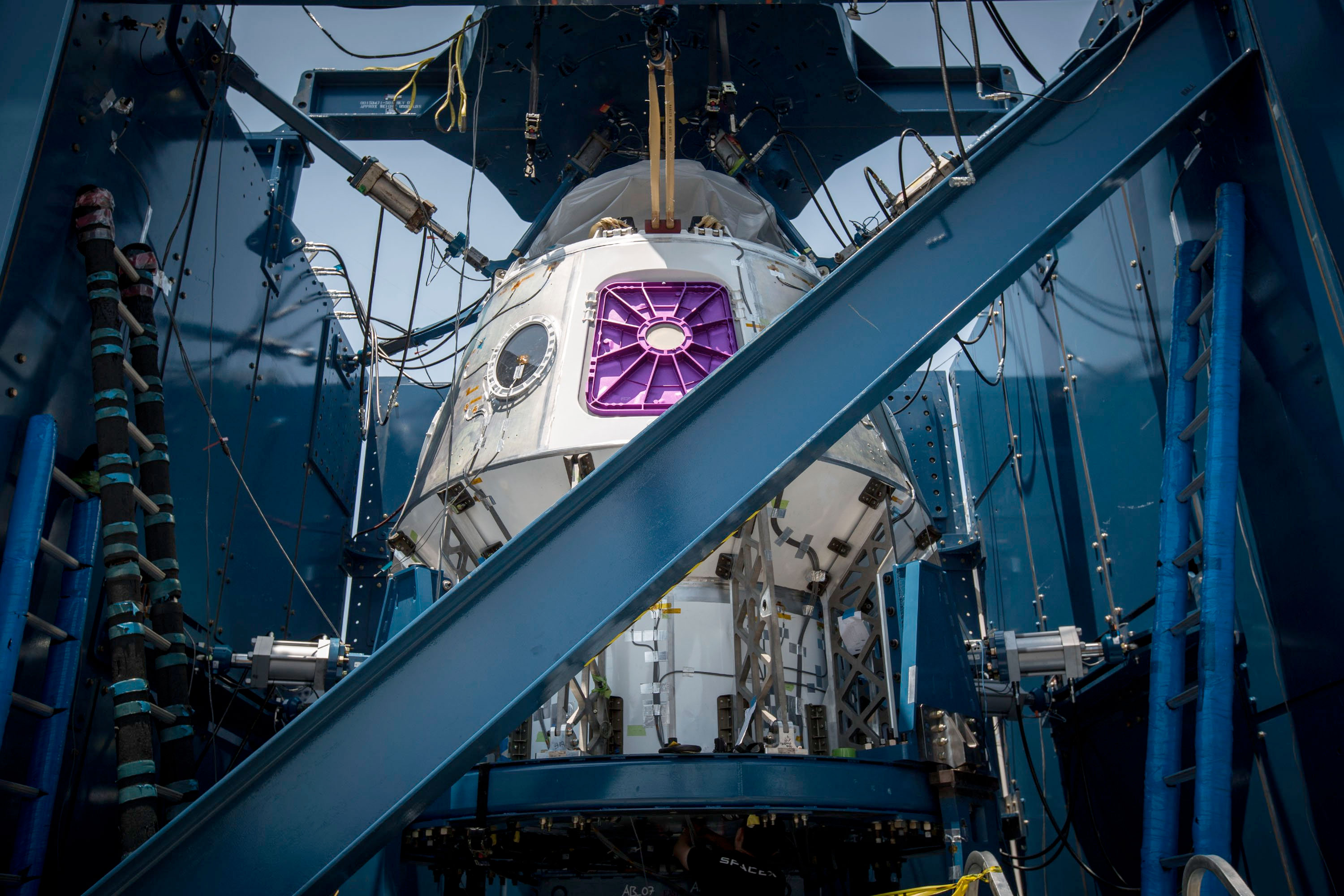
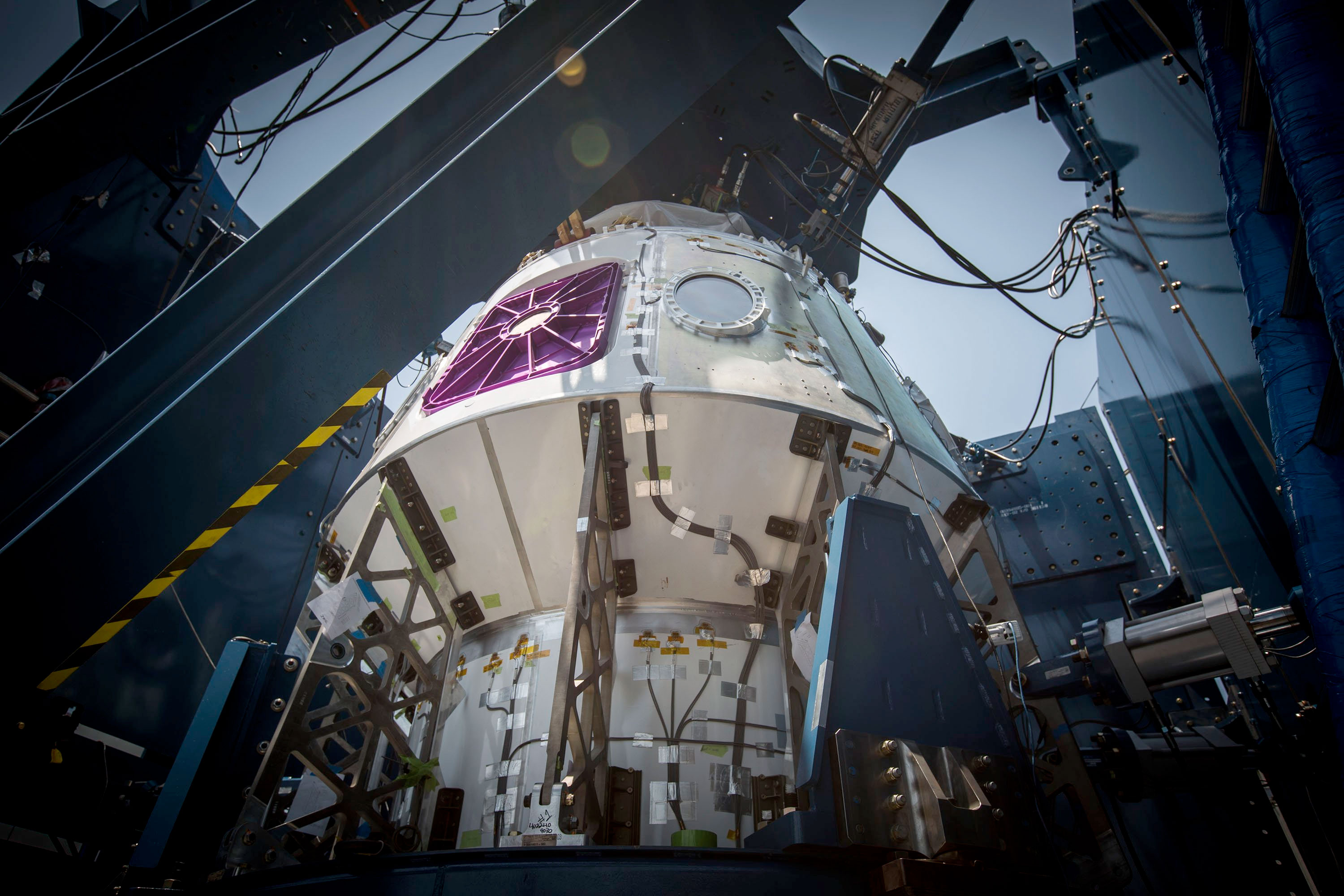
The backbone of Dragon 2 is a metallic welded pressure vessel. SpaceX has completed manufacturing of the first two pressure vessels to be used for ground testing, and is currently manufacturing two Crew Dragon flight articles. The pressure vessel is the primary structure of the spacecraft that protects astronauts during ascent, while in outer space, and during entry and landing to provide a safe and controlled environment in which to travel and work.
Here is a picture of the first test article undergoing structural load testing. This demonstrates the spacecraft's ability to withstand the tremendous forces it's exposed to during space flight.
When we transport astronauts on Crew Dragon to the International Space Station next year, it will be within one of these pressure vessels that over the coming months will turn into a fully functional spacecraft.
Robert Pearlman
NASA release
NASA Orders Second SpaceX Crew Mission to International Space Station
NASA took another important step Friday in returning U.S. astronaut launches from U.S. soil with the order of a second post-certification mission from commercial provider SpaceX in Hawthorne, California. Commercial crew flights from Florida's Space Coast to the International Space Station will restore America's human spaceflight launch capability and increase the time U.S. crews can dedicate to scientific research, which is helping prepare astronauts for deep space missions, including the Journey to Mars.
"The order of a second crew rotation mission from SpaceX, paired with the two ordered from Boeing will help ensure reliable access to the station on American spacecraft and rockets," said Kathy Lueders, manager of NASA's Commercial Crew Program. "These systems will ensure reliable U.S. crew rotation services to the station, and will serve as a lifeboat for the space station for up to seven months."
This is the fourth and final guaranteed order NASA will make under the Commercial Crew Transportation Capability (CCtCap) contracts. Boeing received its two orders in May and December of 2015, and SpaceX received its first order in November 2015. Both companies have started planning for, building and testing the necessary hardware and assets to carry out their first flight tests, and ultimately missions for the agency.
At a later time, NASA will identify which company will fly the first post-certification mission to the space station. Each provider's contract includes a minimum of two and a maximum potential of six missions.
SpaceX met the criteria for this latest award after it successfully completed interim developmental milestones and internal design reviews for its Crew Dragon spacecraft, Falcon 9 rocket and associated ground systems.
"We're making great progress with Crew Dragon, with qualification of our docking adapter and initial acceptance testing of the pressure vessel qualification unit completed" said Gwynne Shotwell, SpaceX president and chief operating officer. "We appreciate the trust NASA has placed in SpaceX with the order of another crew mission and look forward to flying astronauts from American soil next year."
SpaceX is building four Crew Dragon spacecraft at its Hawthorne facility -- two for qualification testing and two for flight tests next year. The company also is in the process of modifying Launch Pad 39A at NASA's Kennedy Space Center in Florida, from which the company will launch future crewed missions to the space station.
A standard commercial crew mission to the station will carry as many as four crew members and about 220 pounds of pressurized cargo, and remain at the station for as long as 210 days, available as an emergency lifeboat during that time.
"With the commercial crew vehicles from Boeing and SpaceX, we will soon add a seventh crew member to space station missions, which will significantly increase the amount of crew time to conduct research," said Julie Robinson, NASA's International Space Station chief scientist. "Given the number of investigations waiting for the crew to be able to complete their research, having more crew members will enable NASA and our partners to significantly increase the important research being done every day for the benefit of all humanity."
Orders under the CCtCap contracts are made two to three years prior to actual mission dates in order to provide time for each company to manufacture and assemble the launch vehicle and spacecraft. Each company also must successfully complete a certification process before NASA will give the final approval for flight.
Robert Pearlman
NASA release
ECLSS put to test for commercial crew missions
Extensive evaluations are underway on the life support systems vital to successful flight tests as NASA prepares to return human spaceflight to the United States. One of the most intensely studied systems is called ECLSS. Short for environmental control and life support system and pronounced 'e-cliss,' the system is a complex network of machinery, pipes, tanks and sensors that work together to provide astronauts with air and other essentials during missions for NASA's Commercial Crew Program to and from the International Space Station.
"ECLSS Systems and Subsystems present unique challenges to a developer," said Brian Daniel, Crew Systems lead for the Commercial Crew Program. "Such systems must assure tight control of parameters that are important to human safety such as temperature, carbon dioxide levels, oxygen levels, and cabin pressure. The various functions of the life support system must not only be failure tolerant and robust, but also able to perform their function for the whole gamut of the mission, from countdown to splashdown."

Above: Engineers evaluate the ECLSS system designed for Crew Dragon missions. Credit: SpaceX
Although tests are run by the companies building the spacecraft, NASA engineers certify the results to see that they meet requirements for safe and reliable operation in flight. NASA also offers insight to head off potential problems and helps solve other dilemmas that show up during testing. Both Boeing and SpaceX are building spacecraft, launch systems and operational networks for Commercial Crew Program missions to the International Space Station.
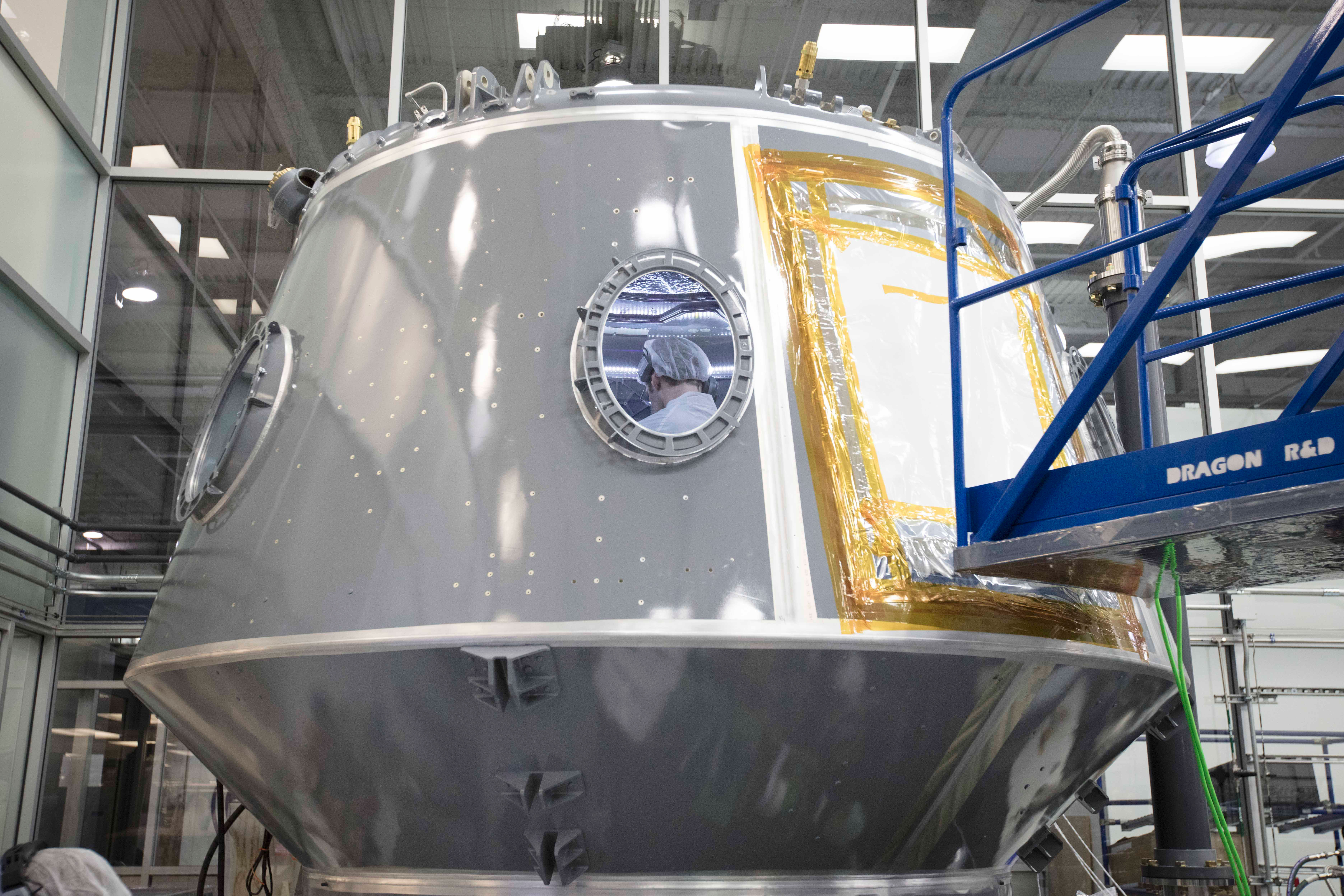
SpaceX built a test version of its Crew Dragon solely for evaluation of the life support system. The ECLSS Module, as the prototype spacecraft is known, was built as close to the specifications of operational spacecraft as possible, SpaceX said, so knowledge gained during its manufacture and testing could be passed on smoothly to flight versions of the spacecraft.
The complex network also provides air for the spacesuits, maintains cabin pressure and regulates all the conditions inside the spacecraft such as temperature and humidity. It can also provide fire suppression and scrubs the air of the carbon dioxide that astronauts exhale. The system relies heavily on computer software to automatically adjust conditions for the crew throughout a mission.
Astronauts will still wear launch-and-entry spacesuits while inside the spacecraft during certain phases of their missions to guard against cabin leaks or other emergencies such as a launch abort.
During an earlier phase of development, engineers were sealed inside the ECLSS Module for four hours while the ECLSS provided them a mix of oxygen and nitrogen. The conditions were closely related to those the spacecraft and astronauts will experience in flight.
Above: The SpaceX ECLSS module was built to provide a testing area for the environmental control system. Credit: SpaceX
"Unlike relying solely on computer simulation and analysis, the ECLSS Module allows us to test and observe Crew Dragon's life support systems as they autonomously control a real cabin environment," said Nicolas Lima, a life support systems engineer at SpaceX. "Extensive testing of the ECLSS module has and will continue to contribute to improvements to Crew Dragon's design and operation, which ultimately leads to greater crew safety."
Crew Dragons will carry astronauts to the International Space Station on missions for NASA's Commercial Crew Program. The spacecraft will fly into orbit atop a Falcon 9 rocket lifting off from Launch Complex 39A at NASA's Kennedy Space Center in Florida. Separately, Boeing is manufacturing a line of spacecraft called CST-100 Starliners that also will take astronauts to the station for on Commercial Crew missions. NASA has awarded contracts to both companies for flight tests and operational crew rotation missions to the station.
The ECLSS Module of the Crew Dragon includes a transparent floor panel that will not be duplicated on operational spacecraft. While the rest of the spacecraft was built as closely as possible to a flightworthy Crew Dragon, the see-through panel was placed solely for the testing module so engineers could watch the heart of the ECLSS system itself run through its work.
The ECLSS systems – along with all the others necessary for a safe spacecraft – will see their ultimate tests in orbit once NASA experts certify the spacecraft, launch vehicle and other systems for flight.



 advertisement